

School management software promises to streamline modern education technology, leading to improved operations and better student outcomes. Yet, many institutions find themselves drowning in digital fragmentation. The common scenario involves a collection of applications, one system for the Student Information System (SIS), another for billing, a third for attendance, and a collection of spreadsheets for everything in between. This patchwork approach creates a dangerous and systemic vulnerability known as “siloed data.”
The biggest danger inherent in this fragmented digital landscape is not a single system crash, but the failure of mission-critical data to flow seamlessly and accurately across departments. For school administrators, IT managers, and finance leadership, this fragmentation leads to tangible, negative outcomes: wasted staff time, catastrophic financial errors, and critical compliance gaps.
This guide provides an in-depth analysis of the real risks of having disconnected School Management Software. We will move beyond the superficial frustrations of multiple logins to dissect how siloed systems fundamentally undermine institutional efficiency, financial stability, and legal compliance.
Our central thesis is clear: The risks of having disconnected School Management Software far outweigh the perceived cost and effort of implementing a modern, unified ERP for schools. The long-term consequences of maintaining fragmented systems are simply too severe for any institution committed to operational excellence and strategic growth.
Risk 1 Unified School Management Software Solve: Operational Inefficiency and Administrative Burden
The immediate, daily impact of fragmented technology is felt most acutely by staff members struggling with redundant tasks and confusing workflows. When different functional modules cannot communicate, administrative tasks become a significant drain on human resources, leading to the risk of operational inefficiency and staff burnout.
A. The Manual Data Duplication Tax
In a fragmented environment, data entry is not a one-time event; it is a repetitive task in every department. Consider the admission of a single new student:
- The Admissions Officer enters the student’s demographics and enrollment status into the Admissions CRM/SIS.
- The Business Office must manually extract or re-enter the student’s name, grade level, and fee structure into the School Accounting software to generate an invoice.
- The Facilities or Transportation department must manually enter the address into their separate routing application.
- The classroom teacher must confirm the student’s presence in a separate attendance system.
Each manual re-entry consumes valuable staff hours, but more importantly, it introduces a significant risk of human error. A typo in a fee schedule, an incorrect birthdate, or a transposed address can have cascading negative consequences, resulting in incorrect billing, delayed communication with parents, or even a failed compliance report. This unnecessary, redundant work pulls skilled administrators away from strategic tasks and fosters low staff morale.
B. Slowing Down Critical Processes
Disconnected School Management Software creates friction in workflows that should be automated. Core administrative processes slow to a crawl, impacting service delivery to the school community.
- Financial Reconciliation Delays: End-of-month or end-of-year financial closing becomes an exhausting process of manually comparing data across disparate ledgers. The admissions team’s enrollment numbers must be reconciled against the finance team’s tuition receivables. This constant manual cross-checking delays reporting, making administrators reactive rather than proactive.
- Inefficient Parent/Student Communication: If the communications platform is separate from the Student Information System (SIS), sending targeted messages (e.g., alerts for late payments, notifications for a low grade in a specific subject, or a reminder about an upcoming field trip for one grade level) requires exporting, manipulating, and re-importing lists. This lack of real-time synchronisation leads to delayed, inaccurate, or entirely missed communications, causing confusion and frustrating parents.
- Resource Management: Tracking physical assets, such as smart learning tools or classroom technology, is nearly impossible when inventory management is separate from the academic scheduling system. There is no central visibility to determine if a piece of equipment is underutilized, over-budgeted, or simply lost. This hinders strategic resource allocation and forces spending on unnecessary duplicates.
Ultimately, this administrative burden defines operational inefficiency, wasting time, increasing errors, and limiting the school’s capacity for growth and strategic planning.
Risk 2 Unified School Management Software Solve: Financial and Strategic Blind Spots
The most dangerous consequence of fragmented systems is the loss of a clear, unified institutional view. Disconnected School Management Software inherently creates Data Silos, trapping information within departmental boundaries and obscuring the overall financial health and operational performance of the school.
A. The Danger of Siloed Reporting
Financial and academic data must be viewed together to make informed decisions. When systems are disconnected, the ability of leadership to run unified, cross-functional reports is eliminated.
- Inaccurate Revenue Forecasting: The Finance Director needs real-time data from the Admissions system to forecast revenue accurately. If the two systems are disconnected, finance relies on stale, periodic reports from admissions. This lag time makes budgeting volatile and unreliable, leading to poor cash flow management. The school cannot accurately model the financial impact of tuition changes or enrollment fluctuations instantly.
- Failure to Measure True ROI: Strategic resource allocation requires knowing the true cost of specific educational programs. This is often referred to as “Program Costing.” Fragmented School Management Software makes this impossible. The academic system tracks the courses offered and the resources consumed, but the School Accounting system only sees payroll and general supply expenses. Without a unified system linking these costs, administrators cannot determine if a specialized program (e.g., an advanced robotics lab) provides an acceptable return on investment relative to its actual operational cost. Decisions are made based on guesswork, not facts.
B. Budgeting and Liquidity Management Failures
Disjointed systems directly contribute to liquidity crises and budget overruns:
- Delayed and Incorrect Billing: Manual intervention is required to translate enrollment data into billable fees. Any change in a student’s status (e.g., withdrawal, financial aid adjustment, or late enrollment) requires a manual process of updating multiple systems. If the Student Information System (SIS) updates are not instantly reflected in School Accounting, billing is delayed, collections are inefficient, and revenue is lost.
- Wasted Expenditure on Redundant Technology: Schools often implement educational management software point-solutions to fill functionality gaps, such as a standalone platform for parent communication, another for extracurricular registration, and a third for grade tracking. Each solution requires separate licensing, maintenance, and IT support, drastically increasing the total cost of ownership (TCO) compared to a single, comprehensive ERP for Schools. This proliferation of tools is a direct result of the existing School Management Software failing to integrate core functions. The scattered systems become an uncontrollable, costly sprawl.
The lack of real-time, unified visibility created by disconnected School Management Software prevents the institution from engaging in effective school system management and strategic financial planning, forcing reliance on outdated, error-prone spreadsheets.
Risk 3 Unified School Management Software Solve: Compliance and Security Vulnerabilities
In an age of tightening data privacy laws, fragmented technology poses existential risks related to security, privacy, and legal compliance.
A. Data Privacy and Security Liabilities
Disconnected systems exponentially increase the school’s vulnerability to breaches and cyberattacks.
- Increased Attack Surface: Every separate application, database, and manual data transfer point represents a potential entry point for unauthorized access. When staff must manage ten different systems, they must maintain ten different sets of credentials. The likelihood of weak, reused, or compromised passwords increases drastically. A unified School Management Software system, in contrast, secures all sensitive data behind a single, robust security framework, often supported by Single Sign-On (SSO) and centralized Role-Based Access Control (RBAC).
- Inconsistent Security Protocols: Disconnected systems mean that some applications may be running on outdated servers or lack essential modern security features like encryption and regular patching. This creates a “weakest link” scenario where a legacy attendance tracker could serve as the gateway for attackers to access the highly sensitive School Accounting data. Protecting students’ personal and financial information becomes an IT nightmare rather than a controllable process.
B. Compliance and Audit Failure
Compliance is impossible to maintain when records are scattered, incomplete, or contradictory.
- The Audit Trail Nightmare: Any regulatory body or financial auditor requires a clear, chronological, and unalterable audit trail for every transaction and action. When a tuition payment, for instance, is recorded in one system and reconciled manually in another, the audit trail is instantly broken. Proving that financial data directly correlates with the activity in the Student Information System (SIS) requires painstaking, error-prone manual document assembly, often resulting in expensive fines or failure to secure funding.
- Inconsistent Data Retention: Compliance rules dictate how long different types of data (e.g., student health records, financial aid applications) must be retained and when they must be destroyed. With disconnected School Management Software, different systems often have different retention policies, or none at all. This leads to legal exposure, either by failing to produce necessary records during an audit or by illegally retaining data beyond the required period. A unified system enforces centralized, automated data lifecycle policies across the entire organization.
The fragmented nature of the technology environment places an overwhelming administrative burden on the compliance team, turning what should be a straightforward reporting task into a high-stakes, manual regulatory risk.
The Solution: Transitioning to an Integrated School Management Software
The only definitive way to eliminate The Risks of Having Disconnected School Management Software is to transition to a truly unified platform. A modern ERP for Schools is architected to address all the risks detailed above by consolidating core functions onto a single database. This architecture instantly breaks down Data Silos, ensuring that when a student enrolls, the academic record, billing account, communication profile, and resource allocation are updated simultaneously and in real-time. This automated synchronicity is the foundation of operational efficiency, accurate financial management, and robust compliance. The move from fragmented systems to a unified platform is not just an IT upgrade; it is a fundamental strategic decision to protect institutional assets, maximize efficiency, and empower staff to focus on the educational mission.
The Connected Advantage: Syncology’s Unified School Management Software
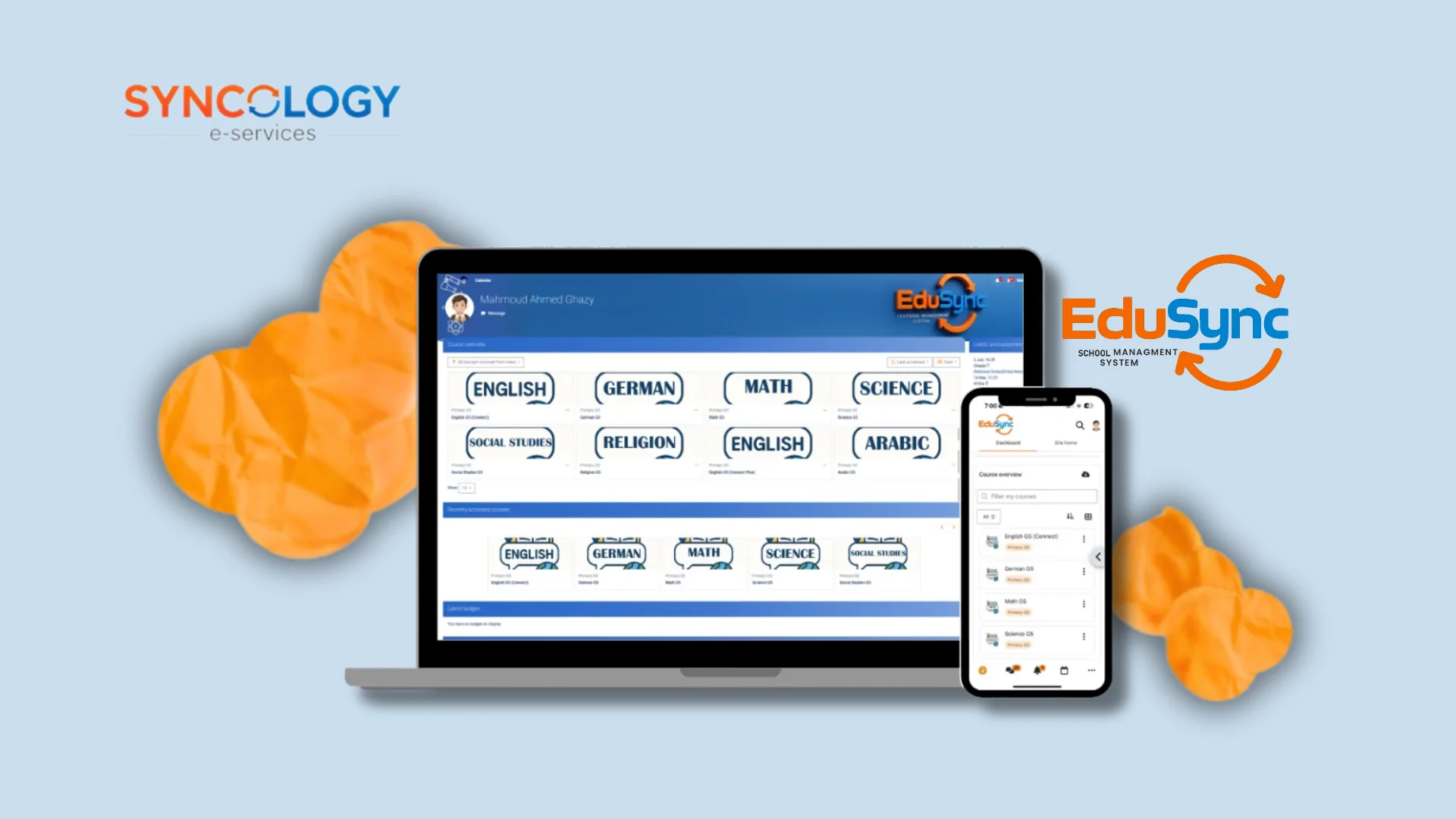
The only definitive way to eliminate The Risks of Having Disconnected School Management Software is to adopt a platform engineered for unity. Syncology offers a fully connected system designed to serve as the singular operational backbone for your institution. By centralizing all modules, from admissions and academics to School Accounting and HR, onto one integrated database, Syncology ensures real-time data flow and eliminates manual reconciliation. This unification provides the single source of truth necessary to prevent data silos, streamline workflows, enhance security, and guarantee compliance, allowing administrators to focus on education rather than administrative fragmentation.
Conclusion: Choosing Future Stability Over Current Comfort
The decision to continue using fragmented School Management Software is a choice to accept mounting financial, operational, and compliance risks. While the implementation of a unified ERP for Schools requires commitment, the long-term risks of having disconnected School Management Software, in the form of spiraling inefficiency, strategic blind spots, and severe security liabilities, are simply too high to ignore. Adopting a unified system is no longer a luxury for institutions seeking a technological edge; it is a core strategic necessity for ensuring stability, efficiency, and sustained success in a complex modern educational landscape.
Need to Upgrade your School Management Software?