

In today’s rapidly accelerating educational landscape, digital transformation is no longer a cosmetic choice or a passing “trend” adopted by schools simply to appear modern. Instead, searching for the Best School Management System has become the ultimate lifeline for institutions that wish to remain sustainable and competitive. School administration in 2026 differs radically from what it was a decade ago; we are now facing a generation of digital-native students and parents who rely entirely on their smartphones to complete every daily transaction. Consequently, traditional administrative bureaucracy is no longer effective in the face of increasing student numbers and curriculum complexity, which raises the search for the Best School Management System.
Traditional schools that rely on “isolated islands”, where each department operates in total isolation from the others, are suffering from a severe “data crisis.” You often find the student affairs department drowning in paper records, while the accounting department manually attempts to reconcile collections, and teachers struggle simultaneously to record grades and track attendance. This fragmentation leads to wasted time, increased human error, and a loss of trust with parents. This is where the Best School Management System steps in to play the role of the “Maestro,” linking all these disparate threads together in a single, encrypted, and secure database. So what’s the Best School Management System?
Why has searching for the Best School Management System become a necessity rather than a luxury?
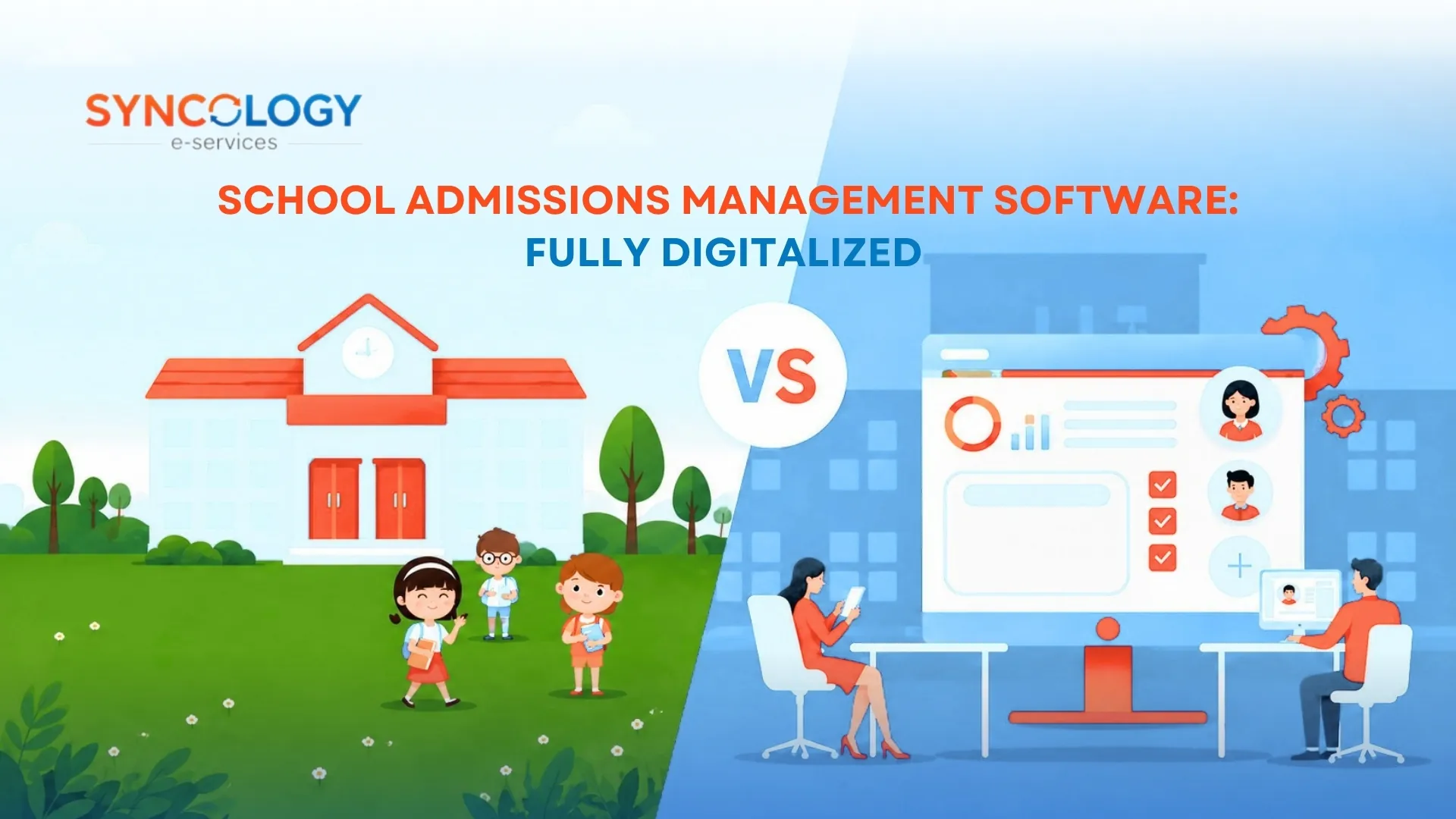
To understand the pivotal role of the Best School Management System, we must compare traditional school administration with smart school administration.
- The Traditional School: Operates on the principle of “Isolated Islands.” The student affairs department is in one world, accounting in another, and the teacher is buried under manual paper preparation. Communication is slow, and data duplication is rampant.
- The Smart School: By adopting the Best School Management System, the institution functions as a single living organism. Data flows seamlessly, and the decisions made by the director in their office are based on real-time reports appearing on their screen, rather than on papers that may contain errors.
The Big Data Crisis in Large Schools and How the “System” Solves It
As student enrollment grows, so does “Big Data.” From complex class schedules to attendance logs and academic results spanning years, without a robust system, this data becomes a burden that is difficult to analyze. A smart system automates this data, making it easy to extract comparative and growth reports in seconds. This embodies the true essence of a modern Best School Management System.
Expectations of New Parents (Millennials) in Digital Interaction
Today’s parents belong to a tech-savvy generation; they expect to pay tuition fees via mobile, track their children’s absences through apps, and receive results the moment they are issued. A school that does not provide a digital school communication system loses its attractiveness to these parents, making the system a powerful marketing tool in addition to being an administrative necessity.
What is the Best School Management System (SMS) and What are its Technical Dimensions?
When discussing the Best School Management System, we are not referring to a simple electronic application or a program for storing names. Instead, we are talking about a deep technical concept known as an ERP System (Enterprise Resource Planning). This system represents the “Central Brain” of the school, as it links all human, financial, academic, and logistical resources into a unified and comprehensive database. Understanding how to choose a suitable ERP System for your school depends primarily on understanding these technical dimensions and how to harness them to serve the educational process.
First: The System as an Integrated ERP Framework
The primary technical dimension of a modern school management system is the ability to eliminate the “Isolated Islands” principle. An integrated system means that data flows automatically between departments; information entered once in the “Admission” section appears immediately in “Accounting,” the “Library,” and “Transportation.” This technical interconnectedness prevents data redundancy and eliminates human errors resulting from manual information transfer, making administration an operation characterized by extreme accuracy and high speed.
Second: The Shift from Local Systems to Cloud Technology
Technically, the fundamental difference between traditional systems and the Best School Management System lies in “Hosting.” Older systems relied on local computers within the school, making data vulnerable to loss in the event of a technical failure or hardware damage. In contrast, cloud systems like EduSync fully open the horizons for online school management. Data is encrypted and stored on global servers protected by multiple layers of encryption. This technical dimension ensures “Business Continuity” for the school under any circumstances, allowing the director or staff to access the system from anywhere in the world with the highest levels of security.
Third: The Integration Philosophy and Its Impact on Operational Efficiency
The third and most important technical dimension is “Operational Integration.” In a professional school management system, as soon as the student data registration process is completed, a “series of digital interactions” begins. The system automatically creates a financial file for the student, determining their fees based on their segment, adds their name to academic class lists, and links them to the appropriate bus route for their geographical location. This complex technical linking is what actually saves thousands of manual labor hours annually, allowing administration to focus on the quality of education rather than drowning in routine technical tasks. Integration is not just a feature; it is the real standard that determines the quality of the system and its ability to lead the school toward the future.
Essential Features That Must Be Present in the Best School Management System
For any system to earn the title of the Best School Management System, it must go beyond being a mere attendance tracking program; it must be a comprehensive operational framework that touches every aspect of school life. Here is a breakdown of the non-negotiable features:
- Academic Management and Learning Management System (LMS): The system must provide an integrated online assignments and exams platform. It is not just about uploading PDF files; the platform must allow teachers to create interactive exams, grade them automatically, and provide immediate feedback to the student. Furthermore, the system must include a “Smart Scheduling Engine” capable of processing thousands of possibilities to prevent schedule conflicts between teachers and classes, while considering available classrooms and labs, a challenge large schools suffer from manually.
- Financial Automation and Electronic Payment: Finance is the sensitive nerve, and the Best School Management System is one that provides a complete accounting cycle starting from “Fee Definition” and ending with the “Balance Sheet.” The most important feature here is electronic payment for the school; parents can pay tuition, bus fees, or uniforms via a secure payment link sent to them automatically. The system must be so precise that upon payment completion, an electronic invoice is issued, the student’s account in the accounting module is updated, and the warehouse is notified to release the uniform, all in a fraction of a second without a single human intervention.
- Student Affairs and Digital Admission: A student’s journey begins with an “Online Application.” A professional system manages the admission process, placement tests, and student data registration in a completely digital manner, eliminating the clutter of paper files. The system must also possess the ability to archive the student’s entire history; if a student graduates and wishes to access their data years later, it should be available instantly with 100% accuracy.
- Human Resources and Teacher Development: Administration is not complete without an HR management system for teachers. The system must link teacher attendance to payroll, manage their professional files, and monitor their academic performance. This linkage ensures fairness and transparency and allows the school to reward excellence based on real, tangible data.
The Role of AI in Distinguishing the Best School Management System
1. Predicting Student Levels and Preventing Failure
Artificial Intelligence in an advanced school management system analyzes student grades in short quizzes and assignments. If the system notices a gradual decline, it sends an immediate alert to the academic supervisor and the parent: “Attention, the student may face difficulty in Mathematics based on their recent performance.” This is known as “Proactive Intervention.”
2. Automating Grading and Analyzing Results
Using an online assignments and exams platform powered by AI, the system does not just grade; it analyzes “the questions most students struggled with.” This gives the teacher an indicator that this specific point in the curriculum needs re-explanation, significantly raising educational quality.
3. Making Sound Administrative Decisions
A successful director does not rely on intuition. The Best School Management System gathers data to tell the director: “The time of year when expenses increase the most is X month,” or “Teacher Y has the highest satisfaction rate from parents.” These reports turn private school management into a precise, scientific process.
The Cost of a School Management System: How to Calculate Your Budget Correctly?
When school owners think about the Best School Management System cost, many fall into the trap of looking only at the “purchase price.” However, the correct calculation for the Best School Management System depends on the concept of “Total Cost of Ownership” (TCO) and “Return on Investment” (ROI). Here is how to analyze your budget professionally:
- First: SaaS vs. One-Time Purchase: Cloud systems (SaaS), like EduSync, are often more cost-effective for schools because you do not need to buy expensive servers or hire an IT engineer to monitor and maintain them. Updates are periodic and free. This model converts “Heavy Capital Expenditure” into “Simple Operational Expenditure” that is easy to predict and manage within the annual budget.
- Second: Hidden Costs: Some systems may seem cheap initially, but you later discover additional costs for every SMS sent, a cost for every training hour, or extra fees to add a new module, like transportation. The Best School Management System offers a clear and transparent package including hosting, technical support, and training, so you are not surprised by expenses that strain your budget mid-year.
- Third: Calculating ROI (The Most Important): Think about the “wastage” the system will save. How much paper and ink does the school consume annually? How many hours do staff spend manually recording grades? How much are the losses resulting from “Bad Debt” or late payments because parents forgot deadlines? A system providing electronic payment for the school can increase collection rates by up to 40% in the first few months because payment becomes a one-click process. When you aggregate these figures, you will discover that the system does not “cost” you money; rather, it “saves” you massive amounts previously lost in administrative and financial waste.
Challenges Schools Face During the Transformation to the Best School Management System
- Resistance to Change from Staff: Veteran employees often fear technology. The solution lies in choosing the Best School Management System with an easy interface, involving them in training, and demonstrating how the system will save them hours of tedious manual work.
- Infrastructure Issues: Some schools may suffer from weak internet. This highlights the importance of online school management that supports operation on low internet speeds and provides lightweight mobile apps that function efficiently, a factor we prioritized in the design of EduSync.
- The Importance of Continuous Technical Support: Choosing the Best School Management System is a long-term marriage. If the system fails on the day results are announced, and you find no one to support you, it will be a disaster. Therefore, real-time technical support is the most critical criterion in evaluation.
Real-World Experience: Why is EduSync the First Choice for Schools?
Real-world experience is the true test where many software providers fail. However, at EduSync by Syncology, we have built our reputation on real success stories in major schools across Egypt and the region over more than 11 years. Why do experts consider us the Best School Management System? The answer lies in “Operational Depth.” We did not just build a technical system; we simulated a “full working day” inside the school, with all its problems and challenges.
In the real experience of EduSync, you will find that the system “speaks Arabic” fluently, not just in language, but in administrative thought. We know that private school management in our region requires flexibility in dealing with diverse collection methods and many other local details.
The system provides a superior User Experience (UX); a teacher needs no more than 10 minutes to learn how to upload an assignment or record an absence. This drastically reduces the “resistance to change” that usually occurs when introducing new technology.
One of the most vital aspects of the real experience of the Best School Management System is “Real-Time Integration.” Imagine a student is late for the bus pickup; in our system, the supervisor records this immediately, the parent receives an instant notification, the behavior log with the academic supervisor is updated, and if it recurs, an automatic report appears for the director. This interconnectedness is not just a technical feature; it is an integrated “Security System” that protects the school and makes parents feel their child is in a professional environment, monitoring every detail.
Furthermore, online school management via Best School Management System “EduSync” gives the director a “Leadership Dashboard” displaying the school’s pulse in real-time: How many students attended today? How much was collected in fees in the last hour? What is the curriculum completion rate in the language department? This data makes administration a scientific, enjoyable, and stress-free process.
A Brief Tour Inside Examples of EduSync Modules
- Student Affairs Module (Total Automation): In our student affairs program, the process begins with student data registration. The system automatically distributes students into classes based on specific criteria (age, gender balance, etc.). It also manages a “Digital Archive” for every student, where you can see every detail from their first day until graduation, including behavior notes and medical certificates, with one click.
- Accounting and Collection Module (Precision and Security): This is not just a module; it is the best specialized accounting program. The system calculates fees for each student based on a customized “Price Plan” (sibling discounts, excellence scholarships, staff discounts). Most importantly is the “Smart Alerts System,” which sends a message to the parent: “Dear Parent, a remaining installment of X is due; you can pay via this link.” Upon clicking the link and using electronic payment for the school, the debt is closed in the accounts, and a thank-you message is sent to the parent. This operational detail prevents financial disputes entirely.
- Transportation and Clinic Module (Details That Matter to Parents): In managing school transportation, the system provides a “Bus Attendance List”; the supervisor clicks the student’s name upon boarding, and the parent receives an instant notification: “Your child has boarded the bus now.” In the clinic, every visit and medication taken by the student is recorded, making the school management system comprehensive for every detail of the student’s daily life.
Criteria for Choosing a Software Company
- Security and Data Encryption: Your school’s data is a trust. We use encryption similar to banking systems to ensure no financial or personal data leaks. Security in the Best School Management System is the foundation of stability.
- Flexibility in Customization and Addition: We know every school has its unique character. At Syncology, we excel in flexibility; if your school needs a specific workflow in the warehouse or accounts, our programming team develops it specifically to suit your needs.
- After-Sales Service and Continuous Training: We do not just sell the system and leave. We are partners in success. We provide intensive training for every employee, explanatory videos, and technical support available 24/7 to resolve any issue immediately.
Conclusion: Your Decision Today Determines Your School’s Standing Tomorrow
Investing in the Best School Management System is not just about buying software; it is a strategic decision to build a strong and sustainable educational institution. Technology is the only language the future understands, and schools that refuse digital transformation place themselves at the back of the race.
We have seen how the integrated system from EduSync changes the reality of educational institutions, transforming them from exhausting paper-based administration to smart digital management. Possessing the best accounting program, an accurate student affairs program, and an online exams platform is what will make your school a preferred destination for parents seeking quality and professionalism.
Are you ready to experience the Best School Management System? At Syncology, we open the doors for you to experience EduSync in practice.
Contact us now and Request a Free Demo.