
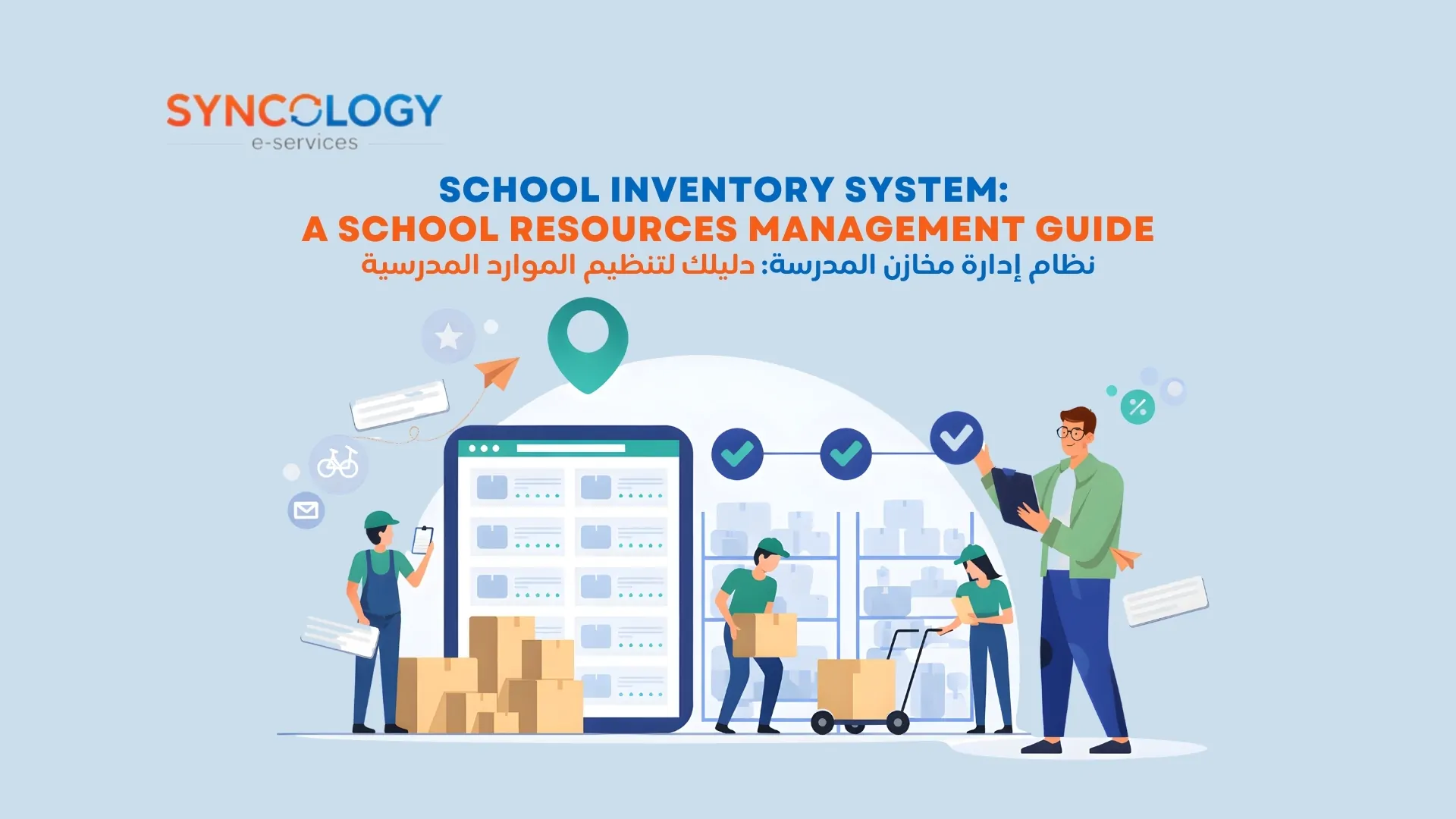

The school inventory system is the most effective technical solution for organizing and monitoring educational and administrative resources, representing the essential pillar for ensuring the continuity of the educational process without interruption or financial waste. In light of the major expansions witnessed by modern educational institutions, it has become impossible to rely on paper ledgers or simple spreadsheets to manage thousands of books, laboratory tools, and smart devices. Implementing an advanced school inventory system grants management a comprehensive and immediate view of every item entering or leaving the school’s custody, which reduces human errors that cost schools thousands of pounds annually. As Egypt and the region move toward full digital transformation in education, this system emerges as an inevitable necessity for international and private schools seeking to achieve maximum operational efficiency and ensure that every school resource is used in its correct place and for its designated purpose.
Why Do Educational Institutions Need a School Inventory System?
Contemporary schools are witnessing a steady increase in the volume and diversity of resources they deal with daily. A school is no longer just classrooms and books; it now includes advanced computer labs, smart projectors, and scientific laboratories containing precise and expensive tools. Here, the urgent need for a school inventory system becomes apparent.
One of the biggest challenges facing schools is the difficulty of tracking these tools; textbooks are often lost, or office supplies are consumed unjustifiably due to the absence of real-time oversight. Manual inventory management always leads to data gaps; a supervisor may suddenly discover a shortage of a certain item at a critical time, or find a large surplus of another item that has been damaged due to poor storage.
A school inventory system comes to solve these problems radically. It does not stop at monitoring quantities but automates the entire lifecycle of the resource. Digital transformation here is not just a “luxury” but a tool for budget control and waste reduction. When a school possesses a digital system, it moves from a “reactive” stage when a problem occurs to a “proactive” stage where the system provides alerts before stock runs out and defines responsibilities accurately by tracking the custody delivered to each employee or teacher, creating an organized and professional work environment.
What is a School Inventory System? A Comprehensive Definition
A school inventory system can be defined as a specialized software platform designed to manage the documentary cycle of inventory within educational institutions, starting from the purchase request and the entry of items into stores, through to their distribution to beneficiaries and their disposal upon damage.
There is a fundamental difference between this system and general commercial warehouse systems; commercial systems focus on profit and sales, while a school inventory system focuses on “educational service and custody.” It is concerned with distributing books according to grade levels, managing laboratory custody that is issued and returned daily, and tracking school furniture across the years.
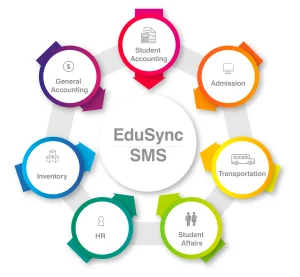
Furthermore, this system plays a pivotal role as an integral part of the comprehensive School Management System (School ERP). It integrates with the accounting department to control expenses and with the procurement department to organize orders. Various entities need this system, including:
- Private Schools: To control expenditures and reduce the loss of tools.
- International Schools: To manage expensive foreign curricula and books and track tablets.
- Universities: To manage large central warehouses and scientific college laboratories.
- Training Centers: To organize the distribution of training bags and educational materials to trainees.
Types of Stock Managed by the School Inventory System
Items within a school vary greatly, making the presence of a school inventory system vital for classifying and managing these resources correctly. Key types of inventory include:
First: Textbooks and Educational Books
Managing books is the most time-consuming task at the beginning of each semester. The school inventory system manages national books, additional international books, and activity books, with the possibility of linking each book to a specific educational level to ensure distribution accuracy.
Second: Educational Tools and Laboratories
Schools include chemistry, physics, and biology labs containing glassware, chemicals, and educational models. The school inventory system helps in tracking these tools, knowing what is consumable and what is in permanent custody that must be preserved.
Third: Office Supplies and Paper
The daily consumption of paper, ink, pens, and administrative notebooks represents a significant financial burden. The school inventory system monitors daily consumption rates and alerts management when paper stock is nearly exhausted, especially during exam periods.
Fourth: School Furniture and Permanent Custody
This includes desks, whiteboards, smart screens, projectors, and computers. Here, the role of the school inventory system is not limited to counting but extends to recording “custody history” and knowing the current location of each device and the person legally responsible for it.
How Does a School Inventory System Work? The Digital Workflow
A school inventory system operates according to an organized workflow that ensures no resource is lost. These steps consist of:
1. Item Registration and Definition
The process begins by entering all resources available in the school into the school inventory system, assigning a unique code (Barcode) to each item. Items are classified (books, furniture, stationery), and the minimum and maximum levels for each are determined.
2. Quantity Management and Warehouse Linking
The school inventory system allows for the management of several sub-warehouses (e.g., book store, sports equipment store, lab store) while linking them all to a main warehouse. The official can see available quantities in each store at the click of a button.
3. Issuance and Transfer Operations
When a teacher needs to withdraw pens or laboratory tools, a “delivery note” is issued through the school inventory system. The quantity is automatically deducted from the stock, the balance is updated, and the recipient’s name is recorded.
4. Personal and Locational Custody Tracking
In the event of delivering a “laptop” to a teacher or employee, the school inventory system records this device as in personal custody. At the end of the year or upon resignation, the system issues a report of all custody that must be recovered, protecting school property from loss.
5. Alerts and Artificial Intelligence
One of the most important functions of a school inventory system is intelligence in management. The system sends automatic alerts to the warehouse manager or procurement department when the balance of a specific item reaches the “reorder point,” preventing crises.
Top Features of the EduSync School Inventory System from Syncology
The school inventory system application from Syncology provides a set of features that elevate school management to a new level of professionalism and accuracy:
- Organizing Inventory with Extreme Precision: The school inventory system prevents duplicate items or quantity conflicts, as every movement (addition or issuance) is recorded with the time, date, and user who operated.
- Real-time Tracking of Issuance Operations: The school inventory system allows for knowing the path of every resource; who requested it? Who approved it? And who received it? This digital sequence reduces opportunities for misuse.
- Instant and Accurate Reports: Instead of spending days on manual counting, the school inventory system provides instant inventory reports at the click of a button, including reports on stagnant items, most consumed items, and the financial value of the stock.
- Reducing Financial Waste: By monitoring consumption rates, management can discover any extravagance in the use of resources (such as paper or office supplies) through the school inventory system and take immediate corrective actions.
- Comprehensive Software Integration: The school inventory system does not work in isolation but integrates with:
- Accounting System: To transfer the value of purchases and inventory to the balance sheet.
- School Management System: To link book issuance with the lists of students who have paid their tuition fees.
Major Challenges in Inventory Management Without a Digital System
Schools that do not possess a school inventory system drown in a whirlpool of administrative problems that affect the quality of education. Among the most prominent challenges are:
First: Loss of Tools and Custody
Without digital recording in a school inventory system, it is difficult to track who borrowed a specific tool and did not return it, leading to the continuous disappearance of devices and laboratory equipment and causing the school to incur replacement costs.
Second: Difficulty Tracking Actual Stock
In traditional management, the “book balance” remains just a number that may have no relation to reality. This surprises management with a sharp shortage of books or tools during peak times, causing great confusion for students and parents that a school inventory system would have prevented.
Third: Human Counting Errors
Manual inventory is an exhausting process prone to a high percentage of error. An item may be dropped from the account or another may be duplicated, making financial and oversight reports inaccurate—something a school inventory system avoids entirely.
Fourth: Slowness in Extracting Reports
When the school principal requests a report on the current inventory value, it may take days in traditional management. In a digital school inventory system, the information is available in seconds for quick decision-making.
Difference Between Traditional Management and a Digital School Inventory System
The following table illustrates the fundamental differences that make investing in a school inventory system an indispensable choice:
| Comparison Point | Traditional (Paper) Management | Digital School Inventory System |
| Recording Method | Manual recording in ledgers prone to damage | Secure cloud-based digital recording |
| Data Accuracy | Subject to human error and forgetfulness | Extreme accuracy and barcode reliance |
| Report Speed | Requires long time and double effort | Instant reports and smart dashboards |
| Ease of Inventory | An arduous and complex annual process | Continuous, periodic, and very fast |
| Resource Efficiency | Significant waste and difficulty in defining roles | Effective management and minimum waste |
| Custody Tracking | Relies on memory or scattered records | Precise tracking of every item and location |
Essential Characteristics of a Professional School Inventory System
When searching for the right school inventory system for your institution, you must ensure the availability of a set of basic technical characteristics:
Item and Category Management
The school inventory system must support an unlimited item tree, allowing resources to be divided into main and sub-groups (e.g., Technology > Tablets > iPad), with support for multiple units of measurement (piece, pack, carton).
Supplier and Procurement Management
The school inventory system should provide a database for suppliers, with a complete record for each supplier including their prices, supply dates, and the quality of items they provide, linking this directly to additional operations.
Periodic Inventory Management
The system must support “surprise inventory” or “periodic inventory” features without stopping work, with the ability to reconcile differences automatically and issue shortage and surplus reports transparently.
Analytical Reports and Administrative Intelligence
The best school inventory system is one that offers analyses of “inventory turnover” and identifies items that consume more budget than necessary, helping in financial planning for the next academic year.
Permissions and Security Management
Given the sensitivity of financial resources, the school inventory system must provide a strict permissions system so that a distribution clerk cannot make adjustments to incoming quantities, with a complete log of every movement.
How to Choose the Best School Inventory System for Your School?
The process of choosing a school inventory system requires precision to ensure it fits the nature of your school. Here are the most important criteria:
- Ease of Use: The school inventory system interface must be simple so that the storekeeper can deal with it without the need for deep technical experience.
- Integration and Linking: Ensure that the school inventory system can link with the accounting and procurement systems to ensure a closed documentary cycle.
- Support for Modern Technology: Look for a school inventory system that supports Barcode and QR Code for quick identification and issuance of items.
- Cloud Security: It is best to choose a cloud-based school inventory system that ensures data is protected from loss and available from anywhere at any time.
- Technical Support and Training: Choose a company that provides intensive training for your employees and continuous technical support to solve any problems.
- Scalability: The school inventory system must be able to accommodate the school’s growth and the increase in students and warehouses in the future.
The EduSync School Inventory System from Syncology
Syncology is a leader in providing educational software solutions, offering a school inventory system as part of its integrated school management system (EduSync). The Syncology solution is characterized by extreme flexibility and the ability to adapt to various sizes of educational institutions.
Our school inventory system supports all operations needed by a modern school:
- Multiple Item Management: With all its technical and financial details.
- Moment-by-moment Stock Tracking: With a full view of incoming and outgoing movements.
- Smart Issuance Management: Linking it to employees and students.
- Professional Inventory Reports: Helping in making decisions based on real numbers.
What distinguishes us is the ability to use the school inventory system as a standalone “management system” if the school owns other systems, or use it as part of an integrated package. Our system is designed to suit international schools, large private schools, and even training centers that possess huge stocks of scientific material. With Syncology, you don’t just buy software; you get a technical partner that ensures your resources are organized in the best possible way.
Conclusion: Toward Smart and Sustainable School Resource Management
In conclusion, it clearly appears that the school inventory system is not just a secondary tool, but the financial and administrative safety valve of the educational institution. Organizing school inventory digitally contributes directly to reducing waste, protecting custody, and improving employee efficiency, which ultimately reflects on the quality of the educational service provided to students.
Digital transformation in resource management via a school inventory system is the first step toward building a smart school capable of competing in the modern era. If you seek to achieve maximum organization with minimum effort, then investing in a school inventory system is the right strategic decision that will bear fruit from the first day of implementation.
Are you ready to organize your school warehouses and eliminate waste?
- Request a Free Demo: And discover how Syncology can transform your warehouses into a smart digital system.
- Consult Our Experts: To get a customized plan that fits the size and type of your school.
- Start Now: And join hundreds of educational institutions that have achieved administrative excellence using a school inventory system.