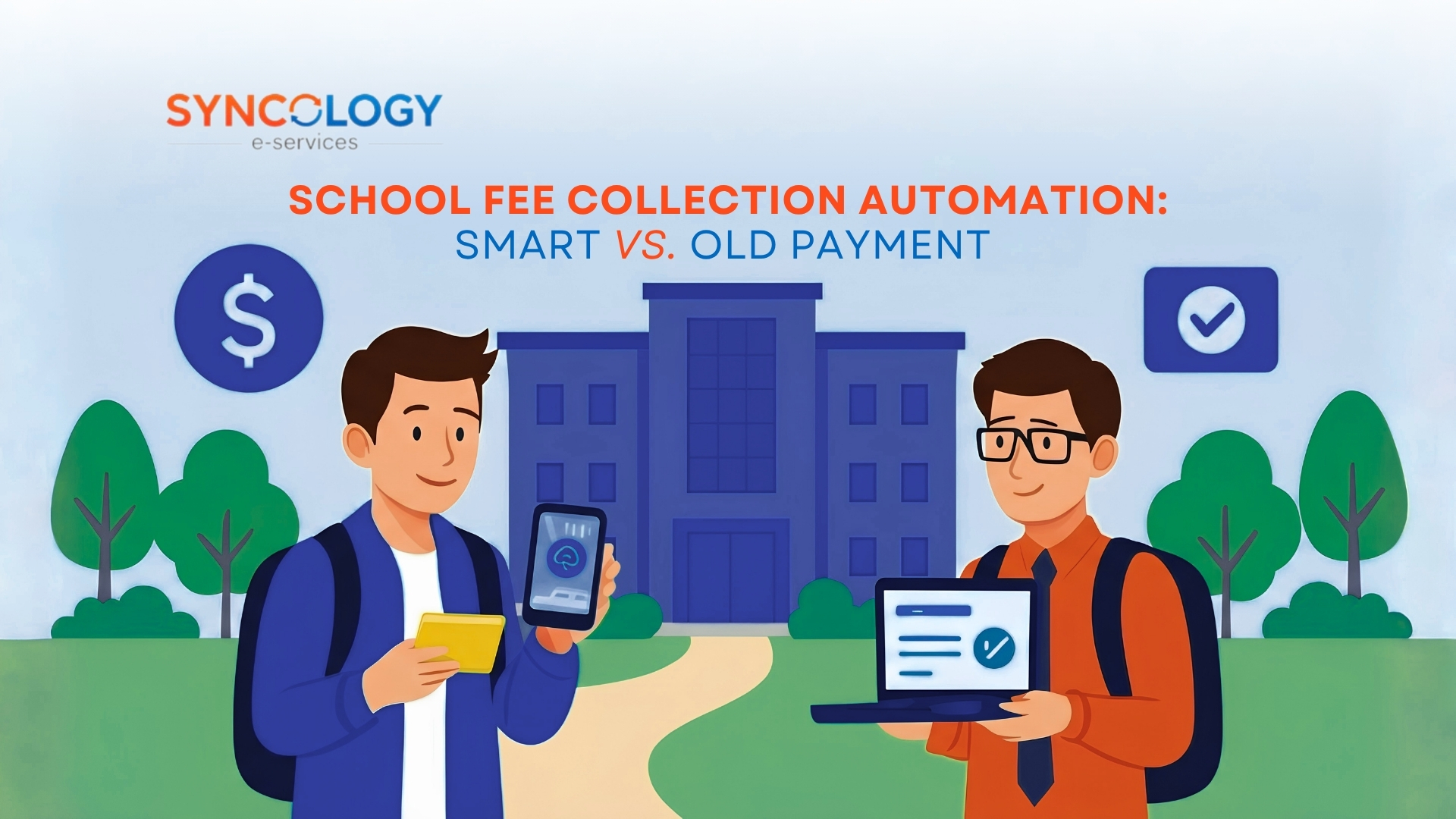

School Fee Collection Automation enables schools to digitize payment workflows, improve cash flow, reduce overdue payments, and provide a more convenient experience for parents. Collecting tuition fees manually often involves spreadsheets, paper receipts, repeated follow-up calls, and significant administrative effort. As schools grow, these manual processes become increasingly difficult to manage. By shifting toward an automated school billing system, educational institutions can transition away from legacy bottlenecks into a modern, data-driven financial infrastructure. This comprehensive article explores the technologies, workflows, and best practices schools can adopt to modernize fee management, optimize tuition fee management, and naturally upgrade their operational health.
What is School Fee Collection Automation?
School Fee Collection Automation is the process of using digital software to manage the entire tuition lifecycle. It automatically generates digital invoices, schedules recurring online school payments, routes funds through secure payment gateways, tracks balances, and sends automated payment reminders, completely removing manual paperwork from school finance operations.
The Problem with Manual Fee Collection
For decades, educational institutions have relied on traditional, labor-intensive workflows to handle their accounts receivable. The problem with manual fee collection is that it is no longer sustainable in a fast-paced, digital-first world. When a school relies on manual processes, the entire financial lifecycle becomes fragmented, prone to error, and heavily dependent on physical administrative presence.
The Cycle of Manual Invoicing and Paper Receipts
In a legacy setup, school accountants spend weeks preparing paper invoices at the start of each term. These invoices are either handed to students—who frequently lose them—or sent via traditional mail, leading to immediate communication gaps. Once a parent makes a payment, usually by bringing physical cash or checks to the school premises, the finance manager must issue a physical paper receipt. This creates a mountain of paperwork that must be filed, stored, and manually logged into a decentralized spreadsheet tracking system.
Spreadsheet Tracking and the Inevitability of Human Error
Spreadsheets are excellent tools for basic calculations, but they are highly inefficient as a core school finance software framework. When thousands of student profiles are managed across multiple tabs, human errors are inevitable. A misplaced decimal point, an accidental deletion of a cell, or a failure to manually log a bank transfer can lead to billing discrepancies. These discrepancies cause friction with parents and force school accountants to spend valuable time auditing rows of data instead of focusing on strategic financial planning.
Late Payments and Delayed Cash Flow
Without an automated tuition payments framework, schools struggle with high rates of overdue accounts. Tracking who has paid and who is lagging behind requires manual reconciliation of bank statements against student rosters. Because this reconciliation happens periodically rather than in real time, late payments often go unnoticed for weeks. This directly results in delayed cash flow, making it difficult for school owners and operations directors to meet immediate operational costs, such as monthly payroll, faculty resources, and facility maintenance.
Inefficient Financial Reporting and Poor Parent Experience
When financial records are scattered across paper logs, local PC ledger software, and disparate spreadsheets, generating comprehensive financial visibility is an administrative nightmare. An operating director cannot instantly pull up a real-time revenue forecast or accurate breakdown of outstanding debts by grade level.
Furthermore, this model creates an incredibly poor parent experience. Modern parents, accustomed to instant digital banking, find it highly inconvenient to visit the school during specific working hours simply to settle an invoice or wait in long queues during peak registration seasons.
Types of School Fee Collection Automation: What’s Possible
School Fee Collection Automation works by linking a school’s database to a digital payment engine. The school fee management software generates electronic invoices based on assigned student fee structures, processes payments securely online, instantly updates student ledgers, auto-generates digital receipts, and handles custom instalment logic automatically.
When a school decides to implement School Fee Collection Automation, they are not just replacing cash with an online form; they are adopting a comprehensive, end-to-end tuition fee management infrastructure. Modern school fee management software handles the complete fee lifecycle, providing several layers of advanced automation:
1. Digital Invoicing and Batch Generation
Instead of creating invoices one by one, an automated school billing system allows the finance team to define standardized fee structures based on grade levels, nationality, or specialized tracks (e.g., British vs. American curriculum). With a single click, the system batch-generates customized electronic invoices for the entire student body, pushing them instantly to parent portals and emails.
2. Multi-Channel Online Payment Processing
Automation allows parents to settle their dues immediately through embedded payment links. The moment an invoice is generated, the system opens up multiple online school payments options, allowing instantaneous clearing without requiring any manual documentation from the school’s staff.
3. Automatic Receipt Generation and Ledger Updates
The second a payment is processed through a gateway, the software automatically triggers two actions: it writes the transaction into the student’s digital account ledger and generates a verified digital receipt that is instantly sent to the parent. This eliminates the need for manual data entry and cuts out administrative duplication entirely.
4. Smart Instalment Management and Scholarship Adjustments
Managing flexible payment timelines is historically complex. School Fee Collection Automation removes this headache by allowing schools to establish pre-set instalment paths. The system can automatically apply localized percentage discounts, sibling waivers, merit scholarships, or corporate allowances to specific profiles, recalculating outstanding balances across future periods without human intervention.
5. Automated Reminders and Financial Intelligence
The platform continually monitors the state of all accounts. If an instalment deadline is approaching or passed, it triggers automated alerts. Concurrently, it feeds real-time data into administrative financial reporting dashboards, transforming raw transactions into operational intelligence.
Online Payment Gateways for Schools (Fawry, Stripe, etc.)
At the heart of any modern online school payments framework sits the payment gateway integration. Payment gateways act as secure bridges that securely encrypt, validate, and route funds from a parent’s financial institution directly into the school’s bank account.
Popular Payment Methods in School Fee Collection Automation for Regional and Global Schools
Schools operating in dynamic markets like Egypt and Saudi Arabia must offer a diverse mix of payment methods to cater to varying consumer behaviors:
- Credit and Debit Cards: Global networks like Visa and Mastercard are baseline requirements for international school demographics.
- Local Card Schemes: In Saudi Arabia, deep integration with local rails like Mada is essential for high adoption, while Meeza cards serve a vital role in the Egyptian market.
- Digital Wallets: Rapidly growing payment channels like Apple Pay, Vodafone Cash, and InstaPay provide immediate checkout friction reduction.
- Localized Aggregators and Cash Networks: Platforms such as Fawry in Egypt allow parents to pay school invoices via local kiosks, mobile wallets, or retail points, bridging the gap between cash preferences and digital tracking.
- Global Gateways: Providers like Stripe offer unified interfaces for international transactions, handling borderless card processing easily.
Core Evaluation Criteria for Selecting a Gateway
When school owners and digital transformation leaders evaluate school payment software integrations, they must weigh several critical operational vectors:
| Evaluation Vector | Strategic Operational Consideration |
| Security & Compliance | The gateway must maintain strict PCI-DSS Level 1 compliance to secure sensitive parent financial data. |
| Transaction Fee Structures | Transaction percentages or fixed fees must be carefully negotiated to balance school overhead vs. parent convenience. |
| Localization & Settlement Speeds | Funds must clear into the school’s primary operating bank accounts quickly (ideally within 24–48 hours) to maintain continuous cash flow. |
| Integration Seamlessness | The gateway should not stand alone; it must communicate directly with the school finance software to instantly mark invoices as paid. |
Automated Payment Reminders via SMS & WhatsApp
One of the largest bottlenecks in traditional tuition management systems is the follow-up process. Finance teams often spend hours calling parents, sending manual emails that end up in spam folders, or printing paper notes for students to carry home. School Fee Collection Automation completely redesigns this dynamic by deploying proactive, multi-channel communication strategies.
Automated Omnichannel Alert Workflows
Instead of relying on retroactive collection drives, an automated tuition payments framework relies on precise, scheduled notification sequences:
- Pre-Due Date Notifications: The system automatically fires a friendly reminder via SMS or WhatsApp seven days before an instalment is due, complete with a direct, one-click payment checkout link.
- On-The-Day Alerts: A notification is sent on the actual due date to prevent accidental oversights.
- Overdue Invoicing Escalations: If a balance remains unpaid past the grace period, the system can systematically escalate reminders via WhatsApp, email, or direct mobile app push notifications, keeping parents aware of the situation without requiring an awkward phone call from a school principal.
- Successful Transaction Receipts: Instantly validating a payment with an automated “Thank You” receipt provides parent assurance and confirms successful ledger processing.
Mutual Advantages of Automated Communication
For schools, this proactive mechanism radically slashes the administrative time spent on manual collections. For parents, it delivers supreme transparency and convenience. It aligns with their daily digital habits, ensuring they never miss a deadline due to lost paperwork or misplaced school circulars.
Real-Time Fee Tracking Dashboards
Financial visibility is the cornerstone of sustainable institutional growth. School owners, finance managers, and administrative managers cannot make accurate operational or capital expansion decisions if they are forced to wait until the end of a semester to understand their true revenue collection rates.
The Power of Centralized Financial Intelligence
A key component of modern School Fee Collection Automation is the real-time financial dashboard. Rather than wading through tables of disjointed text, school leaders are presented with graphical, highly scannable visual interfaces that present the health of the institution at a single glance. These dashboards display:
- Payments Received: Real-time visibility into actual liquid capital collected during the current day, week, or fiscal period.
- Outstanding Balances: An immediate look at total uncollected revenue currently due across the entire student population.
- Overdue Accounts: A clear breakdown of delinquent profiles, sorted dynamically by aging buckets (e.g., 1–15 days overdue, 16–30 days overdue, etc.).
- Revenue Forecasts: Predictive analytics that calculate expected cash inflows based on scheduled payment plans and historically observed parent adoption trends.
Transforming Administrative Decision-Making
Consider a practical scenario: An administrative director or school finance manager opens their command center on the first day of a new academic term. Instead of calling an emergency meeting with auditors, they can filter overdue fees by specific grade levels, target collection strategies toward precise demographics, or isolate which payment channels (such as credit cards or local wallets) are seeing the highest velocity. This enables faster financial decisions, simplifies budget allocations, and forms the bedrock of strategic cash-flow planning.
Instalment Plans & Scholarship Management
Private and international schools rarely use a one-size-fits-all billing system. Complexities arise from customized corporate discounts, sibling waivers, employee benefits, external grants, or staggered payment timelines requested by families. Handling these variables manually introduces a high risk of calculation error and heavily increases the work burden on accounting teams.
Flexible Instalment Logic and Automated Recalculation
With School Fee Collection Automation, a school can build distinct, multi-tiered billing rules directly into the software core. When a student profile is created, the system maps their specific financial identity:
- Sibling Logic: Automatically applies a pre-configured percentage discount (e.g., 5% off for a second child, 10% off for a third child) directly to the base tuition fee.
- Scholarship Allocation: Seamlessly subtracts merit or athletic waivers from the total invoice baseline.
- Staggered Timelines: Splits the remaining net balance into customized payment plans (e.g., bi-annual installments, quarterly structures, or ten monthly payments).
If an unexpected financial adjustment occurs mid-year—such as a student receiving a late-season academic grant—the platform handles the automatic recalculation of all future unpaid installments instantly. This eliminates billing errors, improves family affordability, and delivers immense administrative efficiency without increasing the school accountant’s processing workload.
Integrating School Fee Collection Automation with Your Accounting System
Standalone billing applications often introduce operational disconnects. If your school payment system cannot speak directly to your central ledger, your accountants will still spend countless hours manually cross-referencing bank statements, export files, and parent receipts to keep books balanced. This is why integration is the ultimate goal of any serious digital transformation strategy.
The Value of a Unified Architecture
Integrating fee collection tools with your core accounting modules, school ERP platform, and Parent Portals ensures that data moves securely across the organization without friction. The benefits of a fully unified infrastructure include:
- Automatic Financial Reconciliation: The second a transaction clears an online payment gateway, it automatically drops into the general ledger, reducing manual matching tasks to zero.
- Reduced Duplicate Data Entry: Eliminates the risk of a school accountant typos when copying data from a payment portal into an isolated school finance software application.
- Real-Time Financial Reporting: Ensures profit-and-loss statements, balance sheets, and cash-flow visibility reflect actual bank balances instantly.
- Accurate Budgeting: Gives school owners accurate data points to fund expansion projects, procure educational supplies, or adjust hiring budgets based on verified collection trends.
The Power of an Integrated Platform
This is where comprehensive education ERP platforms demonstrate their true worth. By consolidating student information records (SIS), parent communications, and School Fee Collection Automation workflows into a single ecosystem, tools like EduSync remove the need for disconnected niche systems.
Schools using an integrated approach can eliminate data silos entirely. When student registration data, academic grades, attendance logs, and fee workflows live on the same unified platform, the entire school operates with maximum synergy and clarity.
Case Study for the School Fee Collection Automation: How Schools Reduce Overdue Fees by 60%
Schools reduce overdue tuition fees by offering automated payment reminders, secure online parent self-service portals, and integrated payment gateways. Providing one-click digital checkout options paired with proactive SMS/WhatsApp alerts removes payment friction, often reducing overdue accounts by as much as 60%.
To understand the real-world impact of School Fee Collection Automation, let us examine a typical transformation scenario observed across many private and international institutions.
Before Automation: The Administrative Bottleneck
A multi-campus international school with 1,500 students relied entirely on traditional manual fee collection systems. Invoices were distributed via paper handouts, tracking was managed on fragmented local Excel files, and reminders were handled via manual phone calls from the finance desk.
- The Consequences: By the middle of each semester, over 35% of tuition fees remained uncollected, causing severe cash-flow delays. The accounting team was overwhelmed, spending over 80 hours a month tracking down late balances and manually issuing paper receipts. Disagreements with parents over lost payment slips were common.
After the School Fee Collection Automation: The Digital Transition
The institution deployed an integrated school fee management software platform featuring online payment gateway connections (including credit cards and local cash networks), automated WhatsApp/SMS warning channels, and an intuitive parent self-service portal.
- The Workflows: Invoices were batch-released directly to parents’ mobile phones. Parents could check their outstanding balance, select a flexible instalment plan, and pay securely within seconds via localized payment methods. Reminders were triggered automatically based on real-time ledger statuses.
The Results
Within a single academic cycle, the school witnessed a dramatic turnaround in its financial performance:
– 35% Delinquent Accounts – Overdue Fees Reduced by 60%
– 80+ Hours Monthly Auditing – Instant Gateway Ledger Clearance
– High Parent Friction – High Satisfaction & One-Click Portals
Many schools implementing School Fee Collection Automation report substantial improvements in payment timeliness, with overdue accounts reduced by as much as 60% depending on implementation patterns and parent adoption rates. Administrative workloads decreased significantly, allowing the financial team to shift from aggressive collections to strategic asset deployment, while parent satisfaction rates improved because of the newly introduced transparency.
Evaluation Checklist for your School Fee Collection Automation
Before investing in a new software platform, school owners, principals, and finance managers should evaluate options using this practical criteria list in School Fee Collection Automation:
- Omnichannel Reminders: Does the system natively send payment alerts via WhatsApp, SMS, and email?
- Localized Gateways: Does it support key regional payment methods like Mada, Fawry, and digital wallets?
- Dynamic Pricing Rules: Can it automatically compute sibling discounts, scholarships, and flexible instalment tracks?
- Parent Self-Service: Can parents view real-time outstanding balances and pay securely from their phones?
- Unified Ledger ERP: Does the payment tool integrate directly with student files, attendance logs, and accounting modules?
- Real-Time Dashboards: Does it provide clear financial visibility into revenue forecasts and aging debts?
Conclusion
Manual fee collection is increasingly inefficient, expensive, and a major cause of administrative strain for growing K-12 institutions. Relying on paper receipts, siloed spreadsheets, and manual tracking leads to cash-flow delays, high human error rates, and a frustrating experience for families. On the other hand, shifting to modern digital systems and investing in School Fee Collection Automation platforms improves operational efficiency and financial visibility across all administrative departments. School Fee Collection Automation is no longer simply a convenience—it has become an essential capability for schools seeking sustainable financial operations and a modern administrative experience.
For private and international institutions looking to thrive in competitive markets like Egypt and Saudi Arabia, unifying these operations is the ultimate step toward complete digital transformation. Platforms like EduSync from Syncology help schools automate fee collection while seamlessly connecting finance, student management, and parent communication within a single platform. By removing collection roadblocks and unifying the operational workflow, school leaders can step away from paperwork and focus on their true core mission: delivering world-class education for the next generation.
Frequently Asked Questions (FAQs)
- What are the benefits of School Fee Collection Automation?
School Fee Collection Automation reduces human errors, accelerates cash flow, and eliminates manual receipt tracking. It saves administrative time, minimizes overdue fees through automated reminder tracks, and offers parents a modern, friction-free payment experience via mobile phones or digital wallets.
- How do schools reduce overdue tuition fees?
Schools slash overdue balances by deploying automated multi-channel reminders (WhatsApp/SMS) and providing integrated online payment gateways. Allowing parents to settle balances instantaneously through clear installment options via their preferred local payment networks significantly accelerates collection rates.
- Can School Fee Collection Automation platforms handle scholarships and multi-child discounts?
Yes, premium school fee management platforms feature flexible rules engines that automatically calculate multi-tier configurations. Sibling waivers, merit scholarships, corporate discounts, and custom payment schedules are automatically applied to individual student profiles without requiring manual spreadsheet interventions.