
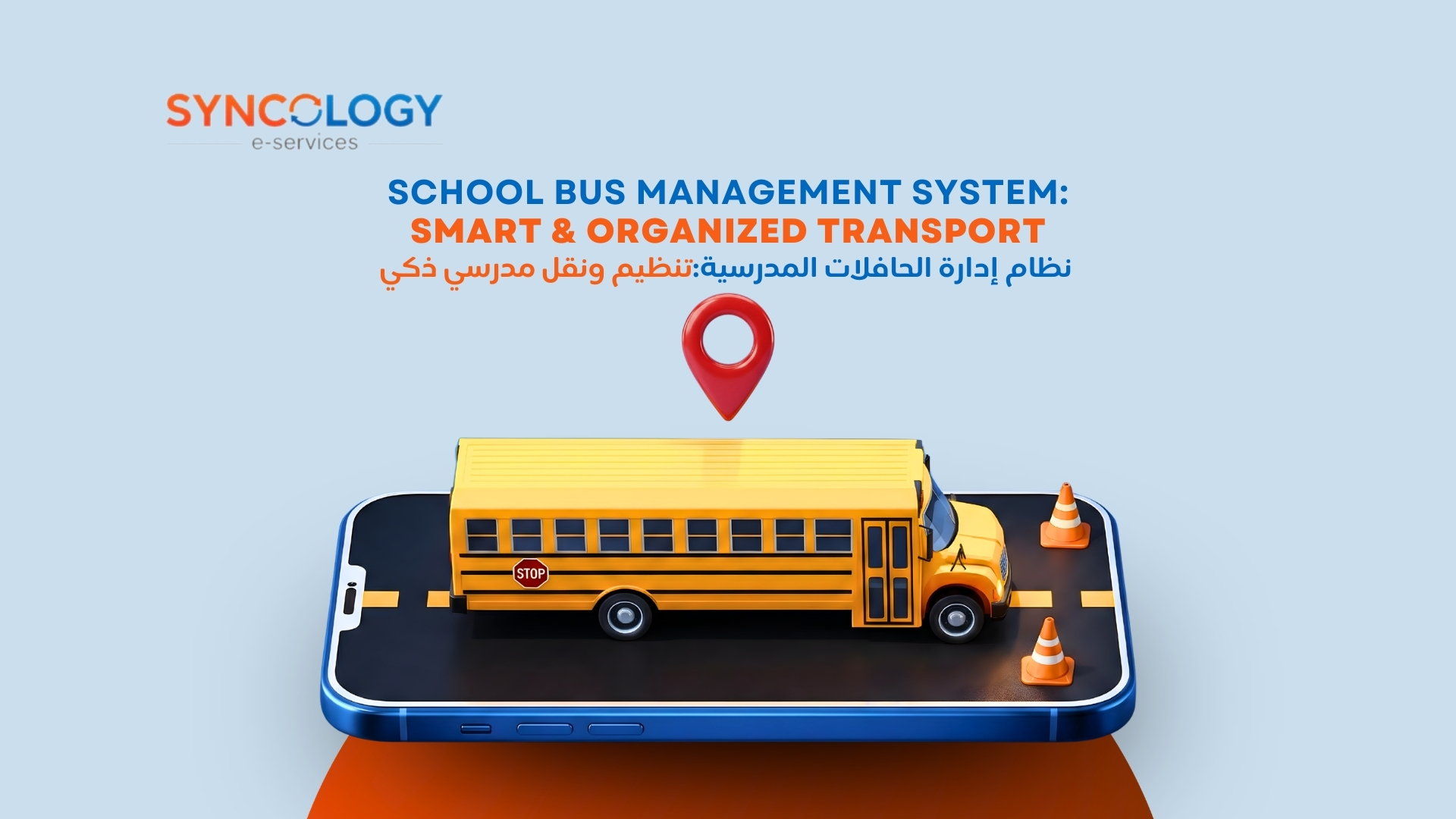

School Bus Management System is the technical engine that shifts educational logistics from administrative randomness to full digital discipline. It serves as a comprehensive oversight system that integrates student safety with financial efficiency. Developing school transportation is no longer just a technological addition; it is a complete re-engineering of the student’s daily journey by transforming the bus into an environment connected in real-time to the school’s operations room. Relying on a School Bus Management system creates a tangible operational difference. While roads are drowning in congestion challenges, these systems grant you absolute control to implement the slogan “Maximum organization with minimum paper effort,” ensuring the protection of your physical and human assets with the highest standards of technical precision.
1. The Importance of Adopting a Modern School Bus Management System
The School Bus Management system is the ideal solution to face the traditional transport challenges that have long exhausted educational administrations over the past decades. In the past, school transport relied entirely on worn-out paper manifests and sporadic phone communication with drivers, placing “student safety” in constant danger due to the lack of real-time visibility and the inability to predict breakdowns or delays. This old pattern drained administrative energy in solving simple logistical problems that could have been avoided through automation.
Today, adopting a School Bus Management system means a physical transition to the era of “Smart Oversight” and Big Data. Safety is no longer just a slogan raised in meetings; it has become a top priority translated by complex algorithms that monitor the bus moment by moment via School Bus Management System satellites. Smart transport provides total peace of mind for parents; instead of children standing for long periods in the streets under the hot sun or rain, the system allows the bus to arrive at precisely scheduled times. Furthermore, the system contributes to protecting students from road fluctuations by analyzing driving behavior (such as excessive speed or sudden braking) and strict adherence to pre-defined routes, significantly reducing the probability of accidents.
2. School Bus Management System and Integrated Human Resources Data Management
A School Bus Management system allows educational institutions unprecedented professional control over driver and supervisor data. The system acts as an “electronic career file” that archives and manages all data related to drivers, starting from identification documents, driving licenses, and their expiration dates, down to daily performance records, traffic violations, and even periodic medical examinations.
This high level of detail ensures the presence of an updated database for everyone responsible for the trip, facilitating legal and administrative accountability in the event of any failure. Through a centralized Dashboard, the transport manager can ensure that the supervisor assigned to the trip possesses all the necessary information to deal with various student age groups and that the driver adheres to all professional safety standards. Managing human cadres through the system prevents randomness in assignment or commissioning and ensures that the right person, who possesses the cleanest and most committed record, is in the right bus at the right time, raising the quality of the educational service in general.
3. Smart Route Engineering and Station Identification in the School Bus Management System
The efficiency of any School Bus Management system depends on its superior technical ability to draw paths and identify stations with extreme accuracy that keeps pace with continuous urban expansion. The system provides advanced tools based on Geographic Information Systems (GIS) to build a road network covering all ranges inhabited by students, with the possibility of identifying “smart stopping points” based on student density in each area.
A simple technical explanation of this process is the system’s ability to import the addresses of students registered in the Student Information System (SIS), then perform a spatial analysis to suggest the shortest, safest path, furthest from traffic congestion or excavations. This smart engineering of routes is not only a time-saver but an economic tool par excellence; it contributes to reducing the daily mileage, which means lower fuel consumption and less maintenance for engines and tires. Thus, the system transforms from a mere monitoring tool into a partner in achieving the school’s financial sustainability by reducing operational costs by a percentage that may reach 20% after adopting a School Bus Management System.
4. Automated Trip Scheduling and Fleet Distribution
Automated trip scheduling is the beating heart of any School Bus Management system striving for excellence and professionalism. The system assigns buses to routes and schedules daily, weekly, or special activity trips in a completely automated manner that eliminates the eternal dilemma: timing conflicts.
Expanding on this point reveals the system’s ability to manage “multi-role” functionality for the same bus, where the “first trip” can be scheduled for elementary students whose day starts early, followed by the “second trip” for high school students, without any overlap or delay. The system takes into account the capacity of each bus and the number of students enrolled in each route and issues alerts if the permitted number is exceeded. This strict discipline in time raises the school’s market value, as the bus schedule becomes a sacred contract between the school and the parent, completely ending the phenomenon of repeated complaints about “the bus being late.”
5. Spatial Intelligence in Seat Allocation Based on Residential Addresses
The system offers a unique feature that goes beyond just riding the bus: identifying student seats inside buses based on the geographical arrangement of their addresses. This feature is not an organizational luxury, but a major operational advantage that contributes to the fluidity of student movement inside the bus.
Imagine a bus carrying 30 students; the school bus management system arranges their seating so that students living at the last point of the route sit in the back seats, while those who disembark at the first stations sit in the front seats. This arrangement prevents crowding and congestion in the middle aisle of the bus and reduces the time wasted at each stop. From a security perspective, this level of smart organization makes the “bus trip” a comfortable experience, reduces friction between students, and gives the supervisor full control over monitoring students, as well as facilitating the evacuation of the bus in emergencies.
6. The Human and Legal Dimension: Family Status and Educational Guardianship
The process of receiving and handing over students is the most sensitive point legally and securely in the history of educational transport. Here, the School Bus Management system excels with the “Educational Guardianship” feature, where the family status of students is taken into account during boarding and disembarking operations. In cases of separation or legal custody disputes, the system is equipped with precise data about the persons authorized to receive the child.
The system ensures that the student is handed over only to the person legally authorized, showing the recipient’s photo and data to the supervisor and driver via the mobile application. If an unauthorized person attempts to receive the student, the system issues an immediate alert to the administration. This close link between “legal student safety” and “technical programming” protects the school from involvement in judicial disputes or kidnapping incidents and confirms to parents that their children are in safe hands following global security protocols, making the school the top choice for parents seeking absolute safety.
7. Managing Daily/Weekly Routes and Emergency Response via School Bus Management System
School life is characterized by dynamism and continuous change, and here the true strength of the system in “Change Management” appears. A School Bus Management system can handle all sudden variables, such as changing dismissal times during exam days, allocating buses for emergency field trips, or even dealing with a bus breakdown mid-route.
In the event of a sudden breakdown, the system allows the transport manager to send a “replacement bus” while shifting the geographical route to it with the press of a button, informing parents via instant notifications of the expected delay and the cause of the breakdown. This transparency in dealing with crises prevents confusion and keeps the administration always in control. The School Bus Management System also supports variable weekly routes, such as evening clubs or tutoring classes, making it a flexible system that serves all school activities without the need to manually reset the system every time.
8. Financial Sustainability: Fuel Consumption Oversight and Maintenance Management
The transport department in many schools often turns into a “black hole” that devours the budget due to the absence of oversight. However, with the School Bus Management system, this department is transformed into an economic unit managed with extreme financial efficiency. The system provides the feature of recording all fuel expenses and tracking the consumption of each engine based on actual kilometers traveled and documented via GPS.
By analyzing this Big Data, management can discover any deviations, whether resulting from a fuel tank leak, using the bus for non-school purposes, or even poor driving behavior leading to increased consumption. The digital link between “cost” and “movement” grants the financial manager accurate periodic reports, enabling them to monitor the annual transport budget with 99% accuracy, contributing to maximizing the educational institution’s profits by closing invisible financial waste gaps.
9. Preventive Maintenance: Building Future Plans Based on Digital Reports
To protect school assets (the bus fleet) from sudden damage that could cost thousands of dollars, the School Bus Management System provides a “Preventive Maintenance” module. Instead of waiting for a breakdown to occur and the bus to stop working, the system automatically schedules periodic maintenance dates based on digital meter readings.
The system sends alerts to the fleet manager of the need to change oils, check brakes, or replace tires before they reach the danger stage. This approach not only protects students but ensures buses remain in excellent operational condition throughout their life cycle, raising their resale value and reducing the costs of expensive spare parts resulting from neglect. Programmed maintenance means an “uninterrupted school day,” which is a major competitive advantage for schools that take pride in the quality of their facilities and services.
10. Attendance Records and Complaint Resolution
The School Bus Management system builds a bridge of absolute trust with the surrounding community by providing “digital records” that cannot be manipulated. The boarding and disembarking time of each student is recorded (via smart RFID identification cards or mobile apps), allowing the administration and school to monitor school discipline accurately.
Furthermore, the School Bus Management System includes an advanced module for “Complaint Management,” where a parent can send a note about a bus delay or the unsuitability of the air conditioner temperature inside the bus. This complaint is automatically transferred to the specialized official, and the response time and solution method are documented. This digital documentary cycle ensures that the customer’s voice is heard and transforms negatives into opportunities for development, making the school appear as a professional institution that applies global quality standards (ISO) in all its services.
11. Comprehensive Software Integration: Linking with SIS
The true power of the School Bus Management system lies in its ability to “talk” to other systems within the school. Integration with the Student Information System (SIS) means that student data is not isolated; when a new student is registered or their home address is changed in the central database, these changes are immediately reflected on the bus route and the driver’s application.
This integration completely ends the era of “isolated islands” within the school, where the transport employee does not need to ask student affairs for residential addresses, nor does the accountant need to ask the transport department about students subscribed to the service to collect fees. Everything is done through an automated data flow that ensures “maximum organization with minimum paper effort.” This technical interconnectedness is what makes the school a smart and comfortable work environment for employees, raising their productivity and reducing employee turnover rates.
12. Smart Oversight via Mobile Applications and Seamless Communication
Through the dedicated mobile application for parents integrated with the School Bus Management system, the phenomenon of morning anxiety and tension ends completely. The app provides a live view of the bus location on the map, with smart Push Notifications telling the parent that the bus is two minutes away from their home.
This seamless communication in the School Bus Management System reduces pressure on phone lines at the school, as parents will not need to call to ask about the bus’s location. The app also allows the driver or supervisor to send urgent messages in case of unexpected traffic congestion. This type of technology transforms the “school trip” from an exhausting process for parents into a premium service that increases parent loyalty to the school and makes them “ambassadors” for your brand in their private circles.
13. School Bus Management from Syncology: Why It’s the Best Choice
When we reach the selection stage, EduSync’s School Bus Management system emerges as one of the strongest and most comprehensive systems in Egypt and Saudi Arabia. What makes “EduSync” superior to other software solutions is its philosophy based on integration and innovation:
- Superior Operational Comprehensiveness: It is a single system that manages (staff data, fleet movement, financial accounts, and technical maintenance) all at once, eliminating the need to purchase multiple programs.
- Extreme Financial Accuracy: The system provides Business Intelligence (BI) reports showing unpaid expenses, analyzing the profitability of each route, and issuing automated invoices linked to the school’s financial system.
- Exclusive Legal Security: EduSync is considered the only system that integrates “Educational Guardianship” details and photos of authorized recipients within the daily operation algorithm, providing 100% legal protection for the school.
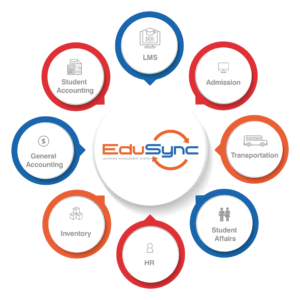
- Connection with the Greater Educational Ecosystem: Being a vital part of the integrated cloud-based EduSync system, it links transport to education (LMS) and administration (SMS), making the educational institution a single harmonious entity moving intelligently from the moment the student boards the bus until their certificates are delivered.
Choosing the EduSync School Bus Management system is an investment in the future, transforming your school into an “educational beacon” that uses technology to serve humanity and provides an educational environment free from organizational flaws or transport risks.

Conclusion: Your Future with Smart School Transport Starts Now
At the end of this detailed guide, it is clear to us that the School Bus Management system is no longer just an application to track movement, but rather an integrated administrative strategy aimed at raising the efficiency of physical and human resources. Schools that adopt Syncology solutions today are those that will lead the locomotive of education tomorrow, because they realize that “small details” such as managing a bus seat or monitoring fuel consumption are what make the difference in institutional excellence.
Are you ready to transform your bus fleet into a smart system that works for you?
Contact the Syncology team today and request a Demo of the EduSync system, and discover how we can help you achieve “maximum organization with minimum paper effort.”