


The teacher payroll system is no longer just a luxury for elite private institutions; it is the fundamental heartbeat of a functional, transparent, and legally compliant school. In the rapidly evolving landscape of modern education, managing the growing complexity of teacher salaries has become a monumental task. School owners and finance teams are often overwhelmed by the intricate web of base pay, performance bonuses, diverse contract types, and variable deductions that define the academic workforce.
Relying on manual payroll processes in schools is a recipe for disaster. From clerical errors that lead to underpayment (destroying staff morale) to delays that violate labor laws, the risks are immense. Manual systems lack the agility to handle the sudden shifts in educational scheduling, such as overtime for extracurricular activities or deductions for unplanned absences. This is why automation is the only viable path forward. A dedicated teacher payroll system serves as an essential tool that transforms a chaotic, paper-heavy department into a streamlined, digital powerhouse. By prioritizing accuracy and speed, schools can ensure their most valuable assets, their teachers, are compensated fairly and on time, every single month.
What Is a Teacher Payroll System?
At its core, a teacher payroll system is a specialized software solution designed to automate the end-to-end process of calculating and distributing compensation for educators and school staff. While a generic payroll system might suffice for a standard retail business, schools operate under a unique set of parameters that require a more nuanced approach.
A teacher-specific payroll system understands the nuances of the academic calendar, including seasonal breaks, tenure-based raises, and professional development stipends. It plays a pivotal role in school operations by serving as the bridge between the HR system and the finance department. When integrated into a broader School management system, it ensures that data flows seamlessly from the classroom (attendance) to the digital wallet (payslip). In the context of an Education ERP, the payroll module acts as a critical subset of the School HR Software, centralizing employee records, tax documentation, and payment histories into a single “source of truth.”
Key Challenges in Managing Teacher Payroll Manually
Managing a teacher payroll system through manual spreadsheets or paper-based ledgers is a high-stakes gamble that modern educational institutions can no longer afford. The primary challenge lies in the sheer complexity of salary calculations. Unlike standard corporate roles, a teacher’s compensation is often a mosaic of variables. You have base salaries that differ by tenure, subject-matter stipends, and performance-based bonuses, all of which must be cross-referenced with different contract types, ranging from full-time faculty to part-time consultants and substitute teachers.
Furthermore, attendance-based payroll becomes an administrative nightmare when handled manually. Tracking pro-rated deductions for late arrivals, early departures, or specific types of leave (sick leave vs. professional development leave) across a faculty of 50 or 100 members leads to inevitable human errors. These miscalculations do more than just frustrate staff; they create significant compliance risks. Failing to calculate taxes accurately or ignoring updated local labor regulations can lead to heavy government fines and damaging legal battles. Additionally, the time-consuming nature of manual entry means that your finance and HR teams spend days every month trapped in “data-entry mode,” preventing them from focusing on high-value tasks like teacher recruitment, training, and institutional growth.
Core Features of a Teacher Payroll System
To be effective, a teacher payroll system must possess specific “non-negotiable” features that cater to the educational environment:
- Automated Salary Calculations: The system should automatically calculate the gross-to-net pay by factoring in base salary, overtime for coaching or tutoring, recurring bonuses, and statutory deductions (taxes, pensions).
- Attendance Integration: This is perhaps the most critical feature. The payroll module must sync with the school management software’s attendance records. If a teacher is marked absent or late, the system should automatically adjust the salary based on pre-defined school policies.
- Contract & Salary Structure Management: Schools often employ a mix of full-time, part-time, and substitute teachers. A professional teacher payroll system allows for custom salary policies for each category, managing different contract end dates and renewal terms.
- Payroll Reports: Finance teams need visibility. The system must generate monthly summaries, individual salary slips, and broader financial insights that help in budget forecasting.
- Tax & Compliance Management: As regulations change, the software should update its logic to ensure automatic tax calculations remain compliant with national laws.
- Multi-Payment Options: Whether via bank transfers, digital wallets, or checks, the system should facilitate bulk payments with a single click.
- Employee Self-Service Portal: Teachers should be able to log in to their own portal to download payslips, view their payment history, and check their leave balances without emailing the HR department.
Benefits of Using a Teacher Payroll System in Schools
Investing in a dedicated teacher payroll system yields immediate and long-term dividends for a school’s operational health and reputation. The most critical benefit is unmatched accuracy. By removing the human element from repetitive calculations, schools eliminate the risk of “math errors” that cause financial leakage or demoralizing staff disputes. When a teacher receives a precise payslip that correctly accounts for every extra hour worked, it builds a foundation of trust between the administration and the faculty.
Moreover, the time-saving automation provided by such a system allows the finance office to complete in a few hours what used to take an entire week. This efficiency translates into financial transparency; every riyal, pound, or dollar is accounted for, creating a clear and immutable audit trail that is invaluable during year-end audits. From a management perspective, these systems allow for superior financial planning. School owners can run “what-if” scenarios—such as the impact of a 5% general pay raise or the cost of hiring ten new teachers—to see how it affects the annual budget instantly. Ultimately, a reliable payroll experience leads to improved employee satisfaction and higher retention rates, as staff feel valued and respected through timely and transparent compensation.
How a Teacher Payroll System Improves HR Efficiency
The HR department in an educational institution is often the most overburdened sector, yet a teacher payroll system acts as a powerful force multiplier for their efficiency. By automating the data-entry tasks associated with new hires, contract renewals, and salary adjustments, it drastically reduces the HR workload. Instead of manual filing, HR managers can utilize School HR Software to manage employee lifecycles digitally, ensuring that every document, from the initial contract to the final retirement plan, is linked directly to the payroll engine.
Furthermore, the system streamlines operations by providing a “single source of truth.” When a teacher’s status is updated (for example, a promotion or a change in bank details), the information reflects across the Education ERP immediately, preventing the need for duplicate entries in separate systems. It also supports performance tracking; by integrating financial incentives with professional milestones, HR can easily reward top-performing teachers without manual intervention. Because the payroll system integrates seamlessly with other HR modules, it allows the team to move away from reactive “firefighting” and toward proactive staff management, focusing on teacher wellness and academic quality rather than chasing down missing attendance sheets or correcting pay errors.
Integration with School Management Systems
In the world of B2B educational technology, “integration” is the word of the year. A standalone teacher payroll system is helpful, but an integrated one is revolutionary. For a school to reach peak efficiency, the payroll module must communicate with:
- The HR System: To fetch employee details and contract types.
- The Attendance System: To calculate variable pay based on hours worked.
- The Finance System: To update the general ledger and school balance sheets.
This centralized data approach within a School management system or ERP for schools eliminates data duplication. When a teacher’s status is updated in the HR module, it is reflected in the payroll module in real-time. This “one-click” synchronization ensures that the school’s digital ecosystem remains consistent and up-to-date.
Teacher Payroll System and Compliance Management
Legal compliance is a significant headache for school administrators. Tax laws, social insurance contributions, and labor union requirements are constantly shifting. A professional teacher payroll system is built with these standards in mind. It ensures that tax withholding is accurate to the decimal point and that the school meets all reporting standards required by the government. By automating these filings, the school significantly reduces its risk of audits or penalties, providing “peace of mind” for the board of directors.
Common Mistakes Schools Make When Managing Payroll
Many schools fall into the trap of “we’ve always done it this way.” Common mistakes include:
- Using Spreadsheets: Excel is a calculator, not a payroll database. It lacks security, audit trails, and automation.
- Ignoring Automation: Thinking that “manual is safer” often leads to more errors, not fewer.
- Lack of Integration: Using separate systems for attendance and payroll leads to “data silos” and manual transfer errors.
- Poor Reporting: Failing to analyze payroll data means the school cannot accurately predict future labor costs.
- Stagnant Policies: Not updating the teacher payroll system logic when national labor laws change.
How to Choose the Best Teacher Payroll System
When school owners look to upgrade their school payroll system, they should prioritize the following:
- Ease of Use: If the software is too complex, the staff will revert to manual methods.
- Customization: Can the system handle your specific bonus structures and deduction rules?
- Integration: Does it play well with your existing School management software?
- Security: Payroll data is highly sensitive. The system must have bank-grade encryption.
- Scalability: If your school grows from 200 to 1,000 students, can the system handle the increased load?
- Support: Does the vendor provide 24/7 technical assistance?
Teacher Payroll System in Syncology
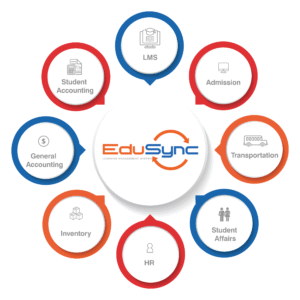
At Syncology, we understand that managing a school is more than just education; it’s a complex business. That’s why our EduSync platform provides a fully integrated ERP for schools that includes a robust HR and payroll module.
Our teacher payroll system is built on a foundation of world-class technology, specifically leveraging Odoo-based HR logic to ensure reliability and depth. With EduSync, schools get:
- Automated Payroll: One-click salary generation.
- Biometric & Attendance Integration: Seamless sync with school gates and classroom logs.
- Dynamic Salary Reports: Visual insights into your school’s spending.
- Modular Flexibility: You can implement the full Education ERP or start with the HR and payroll module as a standalone solution.
Whether you are a small language school or a massive international university, Syncology’s solution is scalable, secure, and designed to make your finance team’s life significantly easier.

Future of Teacher Payroll Systems
The future of the teacher payroll system is shifting from being a static administrative tool to becoming a dynamic, data-driven engine of institutional strategy. We are rapidly moving toward an era where Artificial Intelligence (AI) and Machine Learning (ML) will not just calculate numbers but will provide “Predictive Payroll Analytics.” For school owners and finance directors, this means the system will be able to forecast future budget requirements with pinpoint accuracy, accounting for projected teacher turnover, scheduled tenure raises, and even inflation-adjusted cost-of-living increases years in advance.
Furthermore, we are seeing a move toward hyper-automation, where the “monthly payroll cycle” as we know it will disappear. Instead, the teacher payroll system will operate as a continuous background process, updating in real-time as attendance is logged and milestones are achieved. Integration with digital finance tools and Blockchain technology will also become standard, facilitating instant, secure, and borderless salary transfers for international faculty members, while ensuring an unalterable audit trail.
Another emerging trend is the personalization of compensation. Future systems will allow schools to offer flexible “Benefit Menus” where teachers can choose how their bonuses are allocated, whether into professional development funds, health insurance upgrades, or retirement plans, all managed automatically through an intelligent School HR Software interface. By embracing these advancements, institutions using a modern Education ERP like EduSync will not only streamline their operations but will also gain a significant competitive edge in attracting and retaining top-tier global teaching talent.
Conclusion
Managing payroll is a critical pillar of school operations that directly impacts institutional stability and staff morale. As we have explored, manual systems are simply outdated and dangerous in the modern era. A dedicated teacher payroll system is the only way to ensure efficiency, accuracy, and legal compliance.
By investing in an integrated solution, schools can move away from the chaos of spreadsheets and move toward a future of financial clarity. Don’t let clerical errors hold your institution back.
Ready to transform your school’s administration? Request a demo from Syncology today and discover how our teacher salary management system and School HR Software can upgrade your payroll process to the next level. Contact Syncology now to experience the future of school management!