
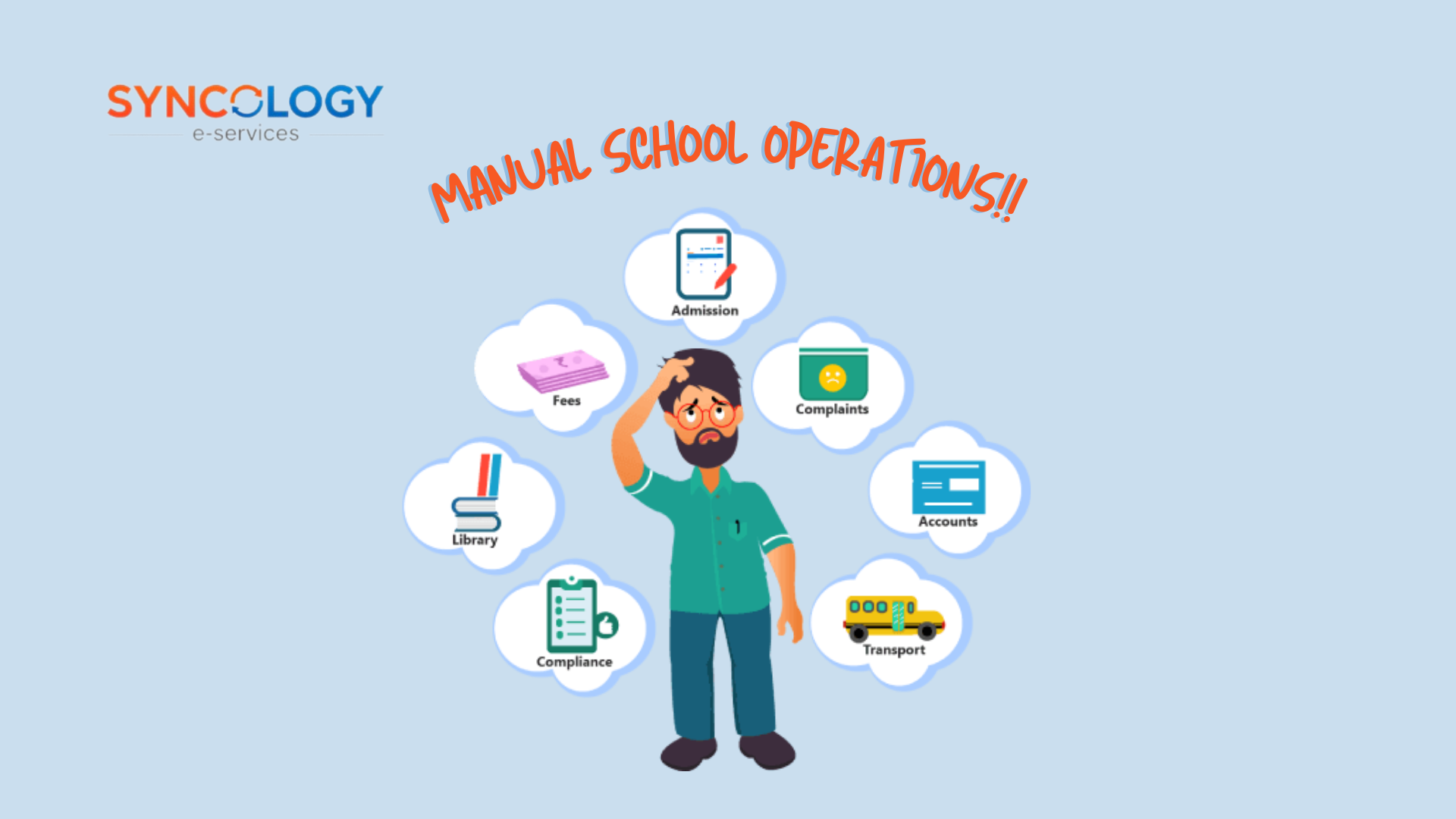

School Operations that rely heavily on paper, spreadsheets, and repetitive human input are fundamentally inefficient, and this inefficiency is far more expensive than most administrators realise. While the obvious expenses, the paper, the toner, the filing cabinets, are visible, they pale in comparison to the massive, invisible drain on resources caused by manual processes. This is the realm of the Hidden Costs of Manual School Administration.
The digital era promises streamlined processes, yet many institutions still cling to legacy methods for everything from student enrollment and attendance tracking to tuition collection and compliance reporting. This reliance on outdated, manual school operations creates systemic drag across the entire institution, costing time, eroding staff productivity, and exposing the school to significant financial and reputational risk.
The core problem in School Operations is often misidentified. It’s not a staff shortage; it’s a systems failure. When high-value administrative staff are forced to spend hours performing low-value tasks like manual data entry or physically shuffling forms, the school pays an “invisible payroll tax.” Furthermore, these manual methods introduce a high potential for Manual Data Entry Errors in Schools, leading to inaccurate records, compliance failures, and financial leakage.
This article will meticulously uncover the three main domains where manual school operations are secretly draining your budget and personnel: staff time, direct financial losses, and strategic/reputational damage. By quantifying these hidden costs, the case for implementing an automated school system management solution becomes immediately clear.
Cost Domain 1: Staff Time and Productivity Drain in Manual School Operations
The most insidious hidden cost of manual School Operations is the silent consumption of staff hours. When calculating administrative costs, schools often overlook the opportunity cost, the strategic work that goes undone because administrators are busy with repetitive clerical tasks. This is the Administrative Inefficiency in Schools at its worst.
A. Enrollment and Admissions: The Data Entry Trap
The annual cycle of enrollment, especially for new students, is a prime example. Schools reliant on paper forms or static PDF downloads in their School Operations face a gruelling process:
- The Physical Grind: Staff must physically receive, sort, and organise hundreds of documents, including applications, health forms, and immunisation records.
- The Re-keying Problem: Every piece of data must be manually transcribed from the form into the school’s various digital systems, such as the Student Information System (SIS). This process is slow and introduces a high rate of Manual Data Entry Errors in Schools.
- The Chasing Game: Administrators spend countless hours on follow-up calls and emails, engaging in a “chasing game” with parents to obtain missing signatures or documents. An automated student management system erp would handle required document lists and send automated reminders, freeing up valuable staff time.
B. Financial Administration: Reconciliation Nightmares
The bursar or finance office often bears the brunt of manual financial School Operations.
- Invoice and Payment Processing: Manual invoice processing requires paper trails, multiple approvals, and physically tracking payments received via bank slips, checks, or differing platforms. This leads to slow processing and difficulty in real-time cash flow management.
- Reconciliation Fatigue: The process of reconciling tuition fees and expense accounts across disjointed spreadsheets and physical bank statements is prone to error and consumes days of effort each month. This directly contributes to Staff Overload School Administration.
- The Cost of Teacher Time on Admin Tasks: Even instructional staff are affected. Teachers spend time manually recording attendance in paper logs, duplicating data entry from classroom systems to the central office, or spending their planning periods filling out expense reports manually. This is a direct financial drain, as high-salaried professionals are performing low-value clerical work. The implementation of educational management software would automate these logging processes instantly.
C. Communication, Reporting, and Compliance
Compliance and reporting are non-negotiable, yet the manual process of compiling data is highly inefficient.
- Slow Report Generation: When data is scattered across files, shared drives, and paper records, generating critical reports (e.g., state-mandated attendance, disciplinary summaries, or end-of-year financial audits) can take days or weeks. This delay hinders strategic decision-making and increases the risk of non-compliance.
- Inefficient Communication: Relying on paper notices, physical sign-up sheets, or outdated phone trees for school-wide communication is slow, unreliable, and costly. Digitising this through an integrated school system management solution ensures instant, trackable communication with parents, drastically reducing the time staff spend on follow-up calls and manual distribution.
The sheer volume of time consumed by these manual tasks proves that the initial cost of Automating School Processes is quickly dwarfed by the continued loss of staff productivity.
Cost Domain 2: Financial Leakage and Lost Revenue in School Operations
When School Operations are handled manually, money is not just delayed; it is often lost entirely. These inefficiencies directly impact the institution’s bottom line.
A. Delayed Collections and Bad Debt
Non-automated billing and payment tracking are primary drivers of bad debt.
- Non-Automated Follow-up: Manual tracking means late fee enforcement is inconsistent, and follow-up on overdue accounts is slow. The longer tuition payments are delayed, the lower the probability they will ever be collected.
- The Cost of Delinquency: Dedicating staff hours to chasing overdue accounts is effectively paying internal staff to perform debt collection. This is an inefficient use of resources and contributes directly to administrative inefficiency in schools. An education erp system automates billing cycles, sends payment reminders, and applies late fees automatically, drastically improving cash flow.
B. Inaccurate Asset and Inventory Management
Schools manage valuable physical assets, including textbooks, IT hardware, lab equipment, and sports gear.
- Loss and Misplacement: Manual tracking via spreadsheets or physical inventories leads to assets getting lost, misplaced, or forgotten in storage rooms. The school then incurs the costly expense of replacing items that were never truly missing.
- Failure to Track Depreciation: Without an integrated school management software system, accurate depreciation tracking for assets is complex, potentially leading to inaccurate financial statements and poor budget planning.
C. Procurement and Supply Chain Inefficiencies
Manual procurement processes lack oversight and central control.
- Duplicate Purchases: Staff ordering supplies independently, without a centralised request system or a single source of truth for inventory, leads to duplicate purchases of materials already in stock.
- Ignoring Contracts: Without automation, staff may order outside of pre-negotiated vendor contracts, missing out on significant bulk discounts and increasing overall spending on supplies, which contradicts the goal of reducing paperwork.
D. Unnecessary Overtime and Temporary Staff
The peaks in manual workload (e.g., registration week, financial audits, large events) often force schools to hire temporary staff or pay existing administrative personnel costly overtime. This direct expense is a hidden tax paid purely to compensate for the lack of systemic efficiency in school operations.

Cost Domain 3: Strategic and Reputational Damage from Inefficient School Operations
The final hidden costs in School Operations are the most damaging in the long term: those impacting strategy, staff retention, and community trust.
A. Eroded Staff Morale and Costly Turnover
Manual tasks are demoralising. High-achieving, qualified administrative staff are hired for their strategic planning, organisational, and leadership skills. When they spend the majority of their time on mundane, repetitive, and error-prone Manual Data Entry Errors in Schools, they experience burnout.
- Cost of Turnover: High staff turnover is incredibly expensive, involving recruitment fees, training costs, and lost institutional knowledge. Addressing staff overload in school administration with automated tools is a direct investment in retention and morale.
- Strategic Stagnation: When key administrators are perpetually bogged down in operational firefighting, they lack the time to focus on strategic initiatives, curriculum development, long-term enrollment planning, or fundraising. This slows the school’s growth and competitive edge.
B. Data Inaccuracy, Compliance Risk, and Liability
The reliance on manual data handling creates profound liabilities.
- Critical Errors: A simple typo during manual entry of student medical or allergy information can have catastrophic safety consequences.
- Compliance Fines: Failure to file accurate reports on time (often due to the difficulty of compiling data manually) exposes the school to hefty regulatory fines and sanctions, directly contradicting the goal of effective school system management.
- Lack of Insight: Without a robust educational management software system, administrators lack real-time, accurate data. Strategic decisions are based on outdated or fragmented information, leading to wasted budget and missed opportunities.
C. Poor Stakeholder Experience and Enrollment Impact
Frustrating parents with repetitive, slow, or confusing manual processes damages the school’s reputation and affects the bottom-line enrollment.
- Parent Frustration: Asking parents to fill out the same contact or medical information on multiple paper forms year after year creates friction. An automated school management software system provides a secure, single-entry portal for all parent-school interactions.
- Competitive Disadvantage: In a competitive market, schools that offer a seamless, modern digital experience via a portal or app (provided by a modern student management system erp) are perceived as more organised and technologically advanced than those still relying on paper forms. The cost of teacher time on admin tasks is not the only issue; the cost of parent time is also a factor.
The Solution: Embracing Automated School Operations
The good news is that these hidden costs for Manual School Operations are not inevitable. They are symptoms of a lack of integrated technology. The solution is clear: digitising and automating School Operations by implementing a modern, comprehensive system.
A. What is a School Management System (SMS)?
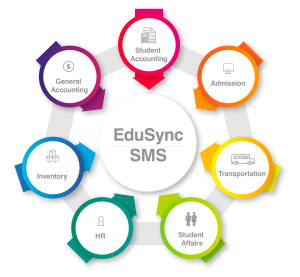
A modern school management system (often referred to as an education erp or student management system erp) is an integrated platform that acts as a central nervous system for the entire School Operations. The question, What is school management system, is best answered by its function: it connects every department, from finance and HR to admissions and academics, providing a single source of truth for all School Operations data.
B. The Power of Integration and Automation
- Single Source of Truth: Data is entered once (often by the parent) and immediately available across all modules, eliminating Manual Data Entry Errors in Schools.
- Instant Reporting: Compliance and strategic reports can be generated instantly with accurate, real-time data.
- Smart Learning Tools: Many systems integrate directly with smart learning tools and Learning Management Systems (LMS), allowing teachers to manage assignments and attendance within the same platform they use for administrative tasks, thereby reducing the cost of teacher time on admin tasks.
- Financial Recovery: Automated billing, payment tracking, and fee collection drastically reduce delayed payments and improve cash flow.
Know About EduSync SMS from Syncology
C. Moving Forward: Your Path to Efficiency
The initial investment in a modern school management software is not an expenditure; it is an investment that rapidly yields returns by eliminating the massive, accumulated financial and human costs of manual school operations. By choosing to automate, schools move away from administrative firefighting and focus their resources where they belong: on enhancing the quality of education.
Conclusion: Recouping Your Hidden Investment
The true expense of manual School Operations is not found in the stationery budget; it is found in the accumulated hours of frustrated staff, the losses from uncollected fees, and the strategic opportunities missed due to administrative inefficiency in schools. This blog post has quantified these hidden costs across time, finance, and reputation.
By transitioning from fragmented spreadsheets and paper forms to a unified educational management software, schools can instantly redirect vast amounts of staff time back to student support and strategic initiatives. The initial investment in a robust school management software is not merely an expense; it is a rapid return on investment secured by eliminating the enormous, chronic costs currently draining your institution. Embrace automation to ensure your resources are focused where they belong: enhancing the quality of education and the stability of your school system management.