
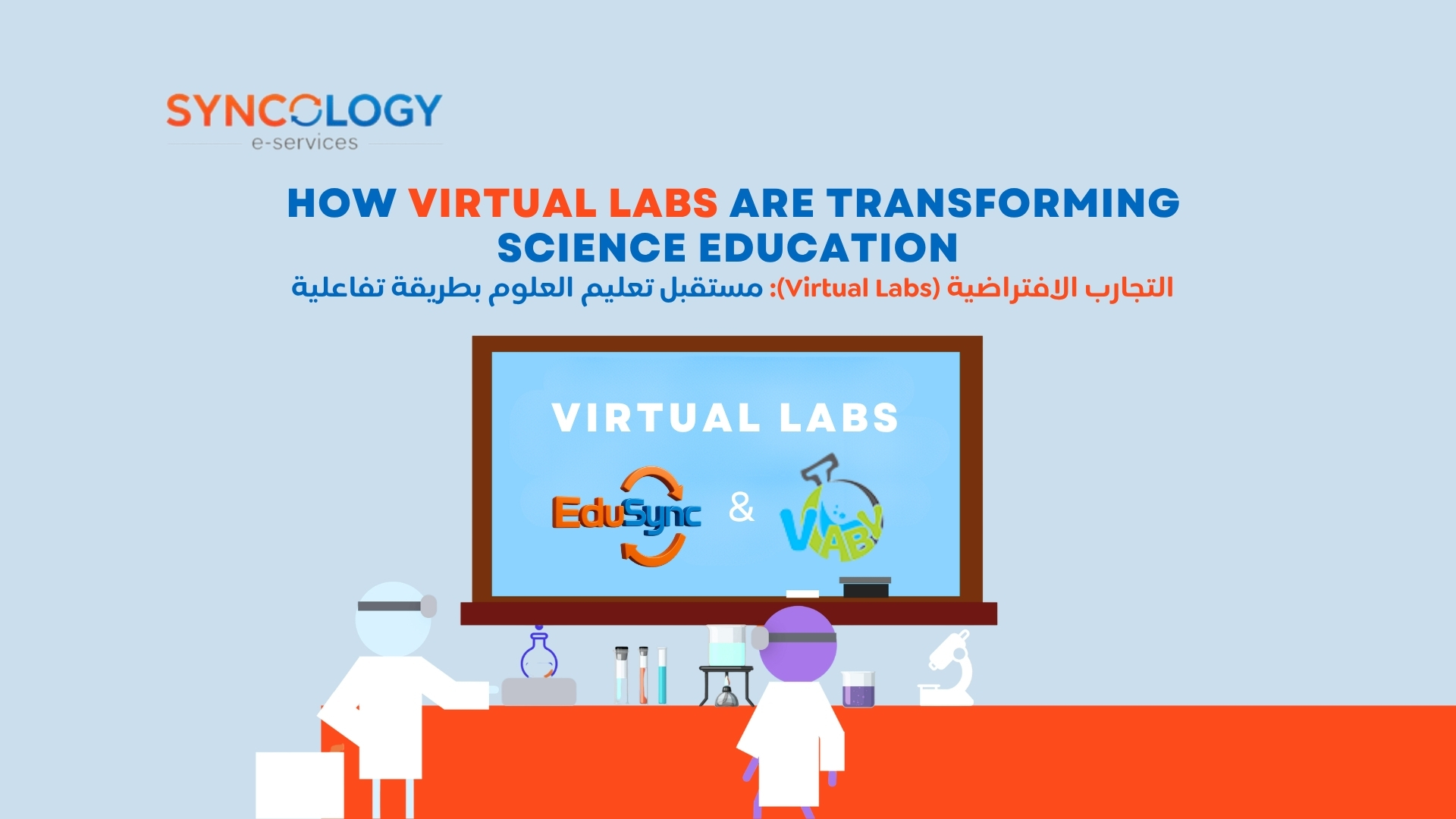

In today’s rapidly evolving pedagogy, Virtual Labs are a cornerstone of digital transformation, connecting theoretical knowledge with practical application. For decades, science education has been anchored to the physical constraints of brick-and-mortar laboratory spaces that, while valuable, often present significant barriers to accessibility, safety, and scalability. Today, the integration of Virtual Labs is no longer simply an emerging trend; it represents a fundamental shift in how institutions approach science education, technology, and interactive learning.
The traditional model of science education is now facing a critical crossroads. For years, the pinnacle of a student’s scientific journey was the weekly trip to the chemistry or physics lab. However, this conventional model is increasingly challenged by limited access to facilities, rising operational costs, and the inherent risks of handling hazardous materials. In many classrooms, the traditional “cookbook” approach to experiments – where students follow rigid instructions to achieve predetermined outcomes – has unintentionally created passive learning environments that limit curiosity, exploration, and critical thinking.
To fully understand the transformative role of Virtual Labs, it is essential to examine the deep-rooted science learning challenges within traditional laboratory settings.
What Are Virtual Labs?
Virtual Labs are digital learning environments that simulate real scientific experiments, enabling students to perform interactive science activities online safely and efficiently. They function as high-fidelity software platforms where the laws of physics, chemistry, and biology are coded into an interactive interface.
How They Work
At their core, Virtual Labs utilize mathematical models to simulate real-world reactions. When a student “pours” a digital beaker of hydrochloric acid into a flask of sodium hydroxide, the software calculates the thermal and chemical outcome instantly, displaying the results through virtual science experiments. These platforms range from simple 2D simulations to immersive 3D environments that can be accessed via a standard web browser, tablet, or VR headset.
Subjects and Simulations
Modern online science labs cover a vast spectrum of the scientific world:
- Chemistry: Exploring molecular structures, titration, and volatile reactions without the risk of explosions.
- Physics: Manipulating gravity, electricity, and optics in a frictionless environment to see pure theoretical laws in action.
- Biology: Performing genetic splicing, virtual dissections, and cellular exploration that would otherwise require weeks of cultivation.
Comparison: Physical vs. Virtual Labs
| Feature | Physical Laboratories | Virtual Labs |
| Cost | High (Maintenance & Reagents) | Low (Subscription-based) |
| Safety | High Risk (Chemicals/Fire) | Zero Risk |
| Accessibility | Restricted to School Hours | 24/7 Availability |
| Repeatability | Limited by Materials | Unlimited |
| Data Analysis | Manual and Time-Consuming | Automated and Instant |
By using science simulations, students can visualize the “invisible,” such as magnetic fields or the flow of electrons, making abstract concepts tangible.
The Difference Between Passive and Interactive Learning with the Virtual Labs
The true power of Virtual Labs lies in their ability to shift the educational needle from passive to interactive learning. In a passive environment, students are spectators; they read about the Krebs cycle or watch a video of a star collapsing. While informative, this method relies heavily on memorization, which often leads to rapid knowledge decay after an exam.
Interactive learning via virtual experiments, however, thrives on experiential learning. When students use a simulation to build their own circuits, they are forced to engage in critical thinking. If the lightbulb doesn’t turn on, they must troubleshoot the “why”—is the voltage too low? Is the circuit open? This trial-and-error process is the essence of the scientific method.
Virtual Labs improve outcomes by:
- Enhancing Retention: Students remember what they do far better than what they hear.
- Boosting Participation: The “fear of breaking things” is removed, encouraging students who are usually hesitant to participate.
- Encouraging Mastery: Because a student can reset a simulation in one click, they can practice until they achieve 100% mastery of the concept.
Benefits of Virtual Labs Experiments for Students
The advantages of adopting digital science education are multifaceted, impacting students, teachers, and institutions alike.
Accessibility and Equity
Perhaps the most significant benefit is the democratization of science. Virtual Labs allow a student in a remote village to access the same high-caliber equipment as a student in a top-tier private academy. As long as there is an internet connection, there is a laboratory.
Safety and Risk Mitigation
In an immersive learning environment, there are no chemical spills, no toxic fumes, and no sharp scalpels. Students can explore the “what if” scenarios, like mixing incompatible chemicals, to see the consequences in a safe, controlled digital space.
Cost Efficiency
For school administrators, the shift to virtual experiments is a financial win. The “per-student” cost of a digital subscription is a fraction of the cost of physical lab fees, insurance, and equipment replacement. This allows schools to reallocate funds toward other critical STEM education resources.
Repeatability and Mastery
In a traditional lab, you get one chance to get the measurement right. In Virtual Labs, you can repeat the process ten, twenty, or fifty times. This unlimited repetition ensures that the “Aha!” moment eventually happens for every student, regardless of their initial pace.
Real-World Applications in Schools
The practical implementation of virtual labs in schools is already reshaping the 2026 academic year. We see these tools being used in three primary ways:
1. The Hybrid Classroom
Many schools use Virtual Labs as a “pre-lab” exercise. Students complete the experiment online at home to understand the theory, then come to the physical lab to experiment with confidence. This maximizes the value of limited physical lab time.
2. Remote and Distance Learning
For students enrolled in fully online programs, remote science learning was once a major hurdle. Now, through educational technology solutions, these students can earn their lab credits from their living rooms, performing high-fidelity simulations that are recognized by major universities.
3. Science Exam Preparation
Teachers are using simulations to recreate complex exam scenarios. Students can practice identifying unknown substances or calculating velocity in a gamified environment, making study sessions far more productive and less stressful.
Integrating Virtual Labs with LMS Platforms
To fully unlock the potential of Virtual Labs, they cannot operate as isolated tools disconnected from the broader educational environment. While standalone virtual simulations can provide valuable learning experiences, their true impact is realized when they become part of a unified and centralized digital ecosystem. This is where LMS integration plays a transformative role in modern education.
A Learning Management System (LMS) serves as the operational backbone of today’s digital classroom systems. It centralizes course materials, assignments, assessments, communication, attendance tracking, and performance reporting into a single platform. When virtual learning platforms are seamlessly integrated into an LMS, schools can create a more connected, organized, and efficient educational experience for both students and educators.
Instead of forcing students to navigate between disconnected systems, LMS integration creates a unified learning journey where science simulations, classroom activities, assessments, and academic progress exist within one cohesive environment. This not only simplifies access but also significantly improves engagement, accountability, and learning outcomes.
More importantly, integrating Virtual Labs with LMS platforms bridges the gap between theoretical instruction and practical application. Students can move directly from studying scientific concepts in a lesson module to applying them instantly through interactive virtual experiments — all without leaving the same platform. This continuity creates a more immersive and effective learning experience that aligns with the needs of modern STEM education.
EduSync LMS and Its Integration with Vlaby
In the pursuit of excellence in science education technology, the partnership between EduSync LMS from Syncology and Vlaby represents the gold standard for modern academic institutions. While EduSync LMS provides a robust, enterprise-grade platform designed to manage every facet of the educational journey, from attendance and compliance to advanced performance analytics, its integration with Vlaby transforms it into a powerhouse for STEM-focused learning.
Vlaby is the Middle East’s first specialized virtual science laboratory platform for school students, offering a sophisticated simulation environment that replicates a traditional laboratory in minute detail. With a library of over 350 hands-on experiments aligned with national and international curricula, Vlaby equips students with all the necessary digital tools, including chemicals, precision glassware, and high-tech measuring devices. By merging these two ecosystems, EduSync provides a truly centralized educational management solution that bridges the gap between administrative oversight and immersive scientific inquiry.
Through this strategic integration:
- Seamless STEM Education: The transition from theoretical instruction to practical application is instantaneous. A student can conclude a video lecture on covalent bonds within the EduSync interface and immediately launch a Vlaby chemistry simulation. This eliminates the “context-switching” barrier, ensuring that knowledge is reinforced while the concept is fresh.
- Centralized Operational Control: Administrative complexity is significantly reduced. From a single EduSync dashboard, school leaders can manage lab licenses, assign specific experiment bundles to grade levels, and monitor the safety-compliant progress of entire school districts in real-time.
- Gamified Engagement and “Game Mode”: Vlaby introduces a unique “Game Mode” where students conduct experiments without instructional prompts to earn stars, badges, and cups. Integrated with EduSync’s communication tools, this creates a high-stakes, motivating environment that rewards deep conceptual mastery over simple rote memorization.
- Pentalingual Accessibility: Catering to diverse global standards, the integration supports virtual experiments in five languages: English, Arabic, French, German, and Indonesian. This ensures that language is never a barrier to scientific discovery within the EduSync ecosystem.
- Advanced Assessment and Analytics: The combination of EduSync’s grading modules and Vlaby’s tracking capabilities allows teachers to evaluate students not just on their final answers, but on their experimental methodology, time spent on tasks, and ability to troubleshoot digital “errors.”
This integration is not merely a technical union; it is the creation of a frictionless path to knowledge. In this ecosystem, Vlaby’s virtual labs serve as the engine of inquiry, where it is safe to fail and repeat, while EduSync LMS serves as the roadmap for success, ensuring that every digital discovery is tracked, measured, and celebrated.
The Future of Science Learning
As we look toward the future of education, the evolution of Virtual Labs is expected to accelerate at an unprecedented pace. What began as simple digital simulations is rapidly evolving into highly intelligent, immersive, and adaptive learning ecosystems capable of transforming how students interact with science itself. The future of science education is no longer limited to textbooks, static diagrams, or even traditional online lessons. Instead, it is moving toward a fully interactive model powered by artificial intelligence, immersive technologies, and globally connected digital classrooms.
This transformation represents a major shift in the philosophy of learning. In the past, science education often focused heavily on memorization and theoretical understanding. However, the next generation of educational technology is placing far greater emphasis on experimentation, exploration, and experiential learning. Students are no longer passive recipients of information; they are becoming active participants inside dynamic virtual environments where learning happens through interaction and discovery.
As AI in education continues advancing, Virtual Labs are expected to become more personalized, responsive, and intelligent than ever before.
AI-Powered Simulations and Personalized Learning
One of the most exciting developments in next-generation learning is the integration of artificial intelligence into Virtual Labs. Future science simulations will not simply guide students through fixed experiments; they will actively adapt to each learner’s behavior, pace, and comprehension level.
The Rise of VR and AR Learning Environments
Another major advancement shaping the future of immersive STEM learning is the expansion of Virtual Reality (VR) and Augmented Reality (AR) technologies within education.
Conclusion
The transformation of science education is no longer a distant goal; it is a current reality powered by Virtual Labs. By addressing the inherent limitations of traditional laboratories – cost, safety, and accessibility- these digital platforms have unlocked a new era of interactive learning.
When we combine the immersive power of Virtual Labs with a centralized LMS platform like EduSync, we provide educators with the ultimate toolkit to inspire the next generation of innovators. Whether you are a small school looking to enhance your curriculum or a large institution aiming for total digital transformation, the path forward is clear. It is time to embrace the virtual science experiments that are making the “impossible” accessible to every student, everywhere.
Explore the future of science with EduSync and Vlaby… where your digital laboratory is always open.
Frequently Asked Questions
1. What are Virtual Labs in education?
Virtual Labs are digital platforms that simulate real-world scientific experiments. They allow students to interact with chemicals, biological samples, and physical apparatus in a risk-free, online environment.
2. How do Virtual Labs improve science learning?
They improve learning by enabling interactive learning and unlimited repeatability. Students can experiment without fear of failure, leading to higher engagement and better retention of complex STEM concepts.
3. Can Virtual Labs replace traditional laboratories?
While they are a powerful supplement and can replace many experiments that are too dangerous or expensive, the best educational approach is a “hybrid” model that combines the tactile experience of physical labs with the scalability of Virtual Labs.
4. Are Virtual Labs effective for STEM education?
Yes. Studies show that students using virtual experiments often score higher on conceptual understanding exams because they can visualize abstract data and practice the scientific method more frequently.
5. How are Virtual Labs integrated with LMS platforms?
Integration is usually done through API or LTI protocols, allowing the lab to function as an “app” within the LMS. This enables centralized grading, tracking, and a unified student experience.