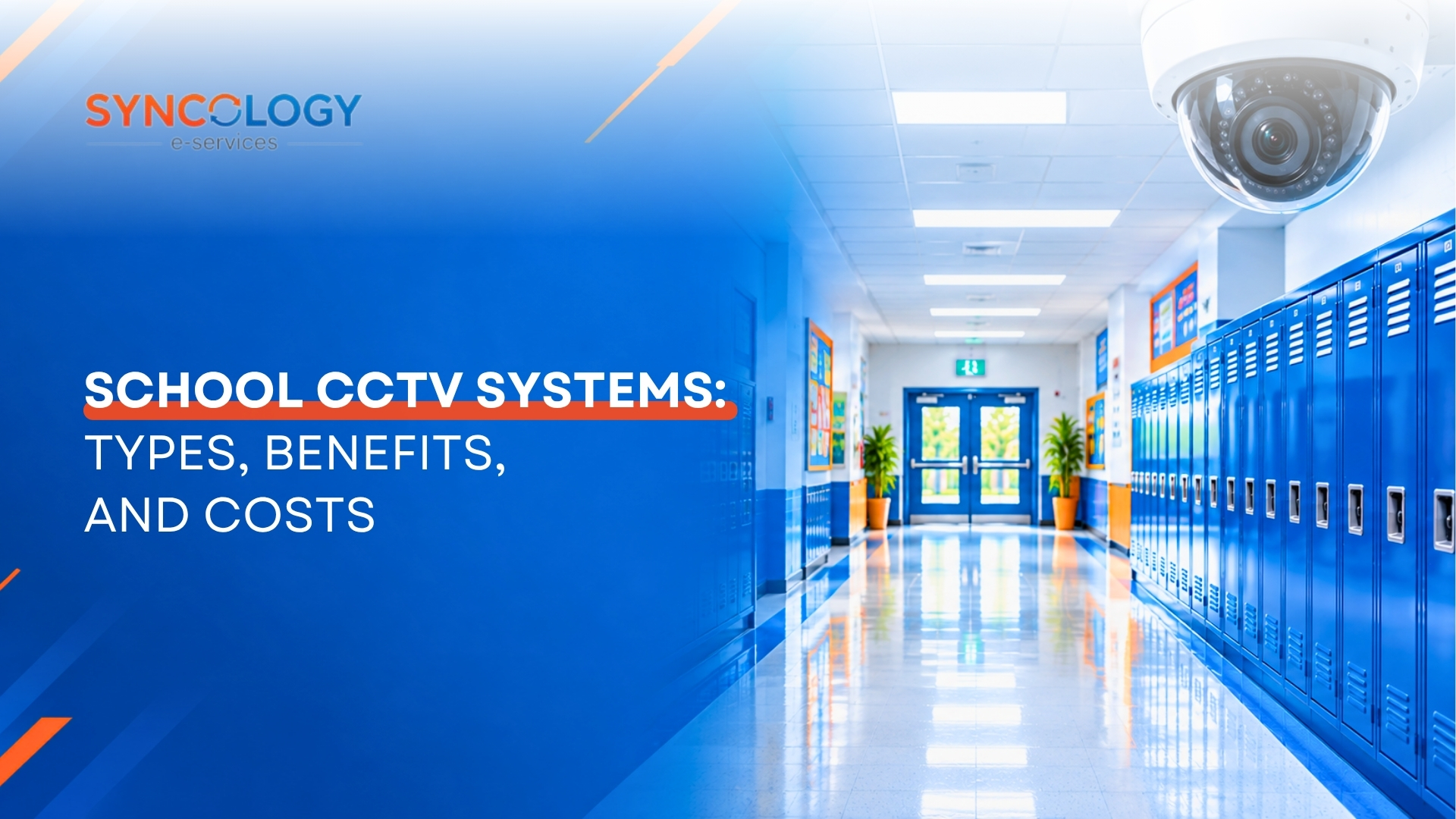

School CCTV Systems play a vital role in modern educational institutions, offering a foundational layer of protection for students, teachers, staff, and visitors. Navigating the security challenges of a contemporary educational campus requires far more than installing a few random devices on exterior walls. Schools are dynamic, bustling environments encompassing sprawling playgrounds, high-traffic corridors, multi-story classroom blocks, administrative offices, and sprawling parking zones. Maintaining continuous visibility across these varied spaces is a complex operational puzzle.
Modern surveillance is no longer a passive exercise in recording grainy, forgettable video clips. When properly planned, integrated, and maintained, a robust security network serves as an active tool for security monitoring, comprehensive incident review, access monitoring, situational awareness, protection of school facilities, and faster response to incidents. Administrators are frequently met with a major fork in the road: choosing between traditional Analog CCTV and modern IP Cameras. Yet, this technological choice is only one piece of a much larger puzzle. Designing an effective surveillance architecture requires a careful evaluation of campus coverage, secure video storage, remote access parameters, strict student data privacy, and a clear understanding of the total cost of ownership. Bypassing these strategic considerations in favor of buying the most expensive hardware or the highest resolution cameras on the market often leads to wasted budgets and vulnerable blind spots.
The Raising Need for School CCTV Systems
School CCTV Systems provide the structural backbone required to address modern educational safety challenges, moving far beyond isolated cameras or outdated recording equipment that leave critical gaps in campus visibility. Educational facilities are uniquely challenging environments; they house hundreds or thousands of minors, valuable technical equipment, and open spaces that must remain welcoming while staying secure. Relying on piecemeal security measures or outdated setups often creates a false sense of security. Implementing an intentional, modern surveillance framework transforms how safety teams protect the campus ecosystem.
1. Improving campus visibility
Comprehensive surveillance infrastructure helps security personnel monitor key operational arteries across the facility. By strategically positioning network and analog lenses, security teams gain continuous situational awareness over high-traffic corridors, common areas, cafeterias, and sprawling outdoor spaces. This constant, centralized visibility allows staff to spot congestion, unauthorized visitors, or unusual gatherings before minor issues escalate into major disruptions.
2. Supporting incident investigation
When conflicts, accidents, or property damage occur, clear recorded footage provides objective, factual evidence to assist administrators during investigations. Rather than relying entirely on conflicting witness testimonies or rushed recollections, school principals can review recorded video to understand precisely how an incident unfolded. It is essential to recognize that CCTV cannot physically prevent incidents from happening in real time; rather, it acts as a powerful investigative and deterrent asset that ensures accountability after the fact.
3. Monitoring entrances and exits
Controlling and monitoring points of ingress and egress is the first line of defense for any educational facility. Modern CCTV setups provide sharp, clear visual logs around:
- Main gates
- Visitor entrances
- Staff entrances
- Student drop-off and pick-up areas
Monitoring these specific choke points ensures that the security team always knows who is entering or leaving the campus boundaries, severely limiting unauthorized access during school hours.
4. Protecting school property
Educational institutions invest heavily in physical assets, including computer labs, interactive smart boards, athletic equipment, fleet vehicles, and specialized vocational tools. Strategic surveillance coverage helps safeguard these valuable assets against theft, vandalism, and unauthorized after-hours access, protecting taxpayer funds and school operational budgets.
5. Supporting security teams
A high-definition surveillance network acts as a powerful force multiplier for on-site security personnel. It allows a lean security team to monitor multiple distant areas of a sprawling campus simultaneously from a central control room. However, cameras should always be viewed as a supportive component of a broader school security strategy—including trained personnel, access control policies, and emergency response protocols—rather than a standalone replacement for human staff.
Key Distinction: More cameras do not automatically translate to better security. In fact, an excessive number of poorly positioned cameras can overwhelm security operators with cluttered feeds, creating a noisy environment where critical details are easily missed. Strategic placement, proper lighting, reliable storage, and restricted access are what make a surveillance network genuinely effective.
Types of Cameras
School CCTV Systems rely on distinct technological approaches, primarily divided between traditional Analog CCTV and advanced IP Cameras. Selecting the right camera technology requires a careful evaluation of the school’s existing infrastructure, coverage requirements, scalability potential, image quality expectations, and total available budget.
| Factor | Analog CCTV | IP Cameras |
| Video transmission | Analog signal | Digital/network-based |
| Recording | DVR | NVR or compatible storage architecture |
| Network dependency | Lower | Higher |
| Image quality | Depends on system | Generally higher flexibility/resolution |
| Scalability | More limited | Generally easier to expand |
| Remote access | Requires additional configuration | Naturally suited to network-based access |
| Existing infrastructure | Useful where analog cabling exists | Works well with network infrastructure |
| Typical use case | Existing/basic installations | New or modernized installations |
Analog CCTV
Traditional analog security cameras capture standard-definition or high-definition video signals and transmit them via specialized coaxial cabling directly to a Digital Video Recorder (DVR). The DVR is responsible for digitizing and compressing the incoming video feeds so they can be stored on internal hard drives.
- Basic architecture: Straightforward point-to-point wiring from each camera to the central recording unit.
- Coaxial cabling: Heavy reliance on RG59 or similar coaxial cables to carry both video and power in some configurations.
- DVR recording: Centralized processing where all video compression and storage management occur within the DVR unit itself.
- Typical image quality: Historically lower resolution compared to digital networks, though modern HD-over-coax formats have bridged some of the gap.
- Installation considerations: Straightforward for technicians familiar with legacy systems, but prone to signal degradation over long cable runs.
Advantages for schools with existing analog infrastructure
For established schools operating on constrained budgets with legacy coaxial cabling already pulled through their walls, analog setups offer a viable path forward. They feature a potentially lower initial equipment cost, a familiar technology stack for older maintenance crews, and a straightforward architecture that requires minimal networking expertise. When an analog foundation is already intact, reusing the cabling saves thousands of dollars in construction and wiring expenses.
Limitations
Despite these benefits, analog systems carry notable constraints. They offer less flexibility for future campus expansion, require dedicated wiring that cannot double as a data network, and possess more limited network functionality. Advanced remote-management capabilities often require cumbersome hardware converters or third-party streaming boxes. Nevertheless, analog CCTV is not inherently obsolete; its value depends entirely on whether a school can leverage pre-existing infrastructure to meet its core security goals without overspending.
IP Cameras
IP (Internet Protocol) cameras represent the gold standard for modern school security architecture. Unlike analog devices, an IP camera captures video as a digital stream, processes the image on board, and transmits packets of data across a local area network (LAN) to a Network Video Recorder (NVR) or centralized server.
- Network connectivity: Integrates directly into existing school IT networks via standard Ethernet cables (Cat5e or Cat6).
- NVR architecture: Decentralized or centralized digital recording where video streams are managed through software and network switches.
- Higher-resolution options: Readily available in 2K, 4K, and ultra-high resolutions capable of capturing crisp facial details and license plates.
- Remote viewing: Built natively for IP network distribution, enabling seamless streaming to authorized mobile and desktop devices.
- Scalability: Adding new cameras is as simple as plugging them into an available switch port on the network.
- Centralized management: Administrators can update firmware, adjust settings, and diagnose faults from a single administrative dashboard.
- Integration possibilities: Easily ties into wider building management systems, access control card readers, and automated alert platforms.
A cornerstone of modern IP deployment is PoE (Power over Ethernet). PoE technology simplifies installation by allowing a single Ethernet cable to deliver both high-speed data transmission and electrical power to the camera. This eliminates the need for separate electrical wiring or local power outlets near every camera mounting point, dramatically lowering installation labor and material costs.
Depending on where cameras are installed around the campus, schools can leverage various specialized features:
- Night vision: Infrared (IR) illuminators for clear imaging in unlit hallways or darkened exterior perimeters after hours.
- Wide Dynamic Range (WDR): Balances harsh lighting contrasts, such as bright sunlight streaming through a glass entryway, ensuring subjects aren’t silhouetted.
- Motion detection: Intelligent pixel analysis or AI-driven triggers that alert security staff only when movement occurs in restricted zones.
- Weather resistance: IP66 or IP67-rated housings designed to withstand driving rain, freezing temperatures, and dust storms for outdoor environments.
- Higher resolution: Crucial for parking lots and gates where identifying fine details is paramount.
- Wide-angle lenses: Perfect for monitoring large open spaces like gymnasiums and courtyards with a single device.
Crucial Note: These advanced features vary widely between models and should be chosen based on actual site requirements rather than treated as mandatory specifications for every single corner of the school. Over-specifying cameras in low-risk storage closets wastes budget, just as under-specifying cameras at high-security main gates compromises safety.
Planning School CCTV Systems Coverage
Designing effective School CCTV Systems must always begin with a rigorous site survey and a comprehensive coverage plan, rather than starting with a arbitrary decision on how many units to purchase. A methodical layout ensures every dollar spent delivers maximum security value.
Priority areas
Entrances and gates
Main entry points require wide situational coverage combined with high enough resolution to identify individuals clearly. Cameras positioned here should capture the faces of all visitors stepping onto school property during operational hours.
Hallways and staircases
Internal corridors and stairwells experience heavy foot traffic between class periods. Camera angles must be selected to monitor movement patterns fluidly, paying careful attention to architectural pillars and alcoves that naturally create blind spots.
Playgrounds and outdoor areas
Outdoor spaces present unique environmental hurdles. Cameras mounted here must feature robust weather exposure ratings, specialized IR capabilities for evening hours, appropriate viewing distances to cover wide playing fields, and high durability against tampering or stray athletic equipment.
Parking and drop-off zones
Traffic congestion during morning drop-off and afternoon dismissal creates safety hazards. Cameras covering these zones must capture vehicle movement, license plates, and pedestrian paths between buses, private cars, and school sidewalks.
Administrative and restricted areas
Sensitive zones—such as the main administration office, nurse’s station, server rooms, and financial archives—require controlled, targeted coverage to protect student records and expensive institutional hardware.
Understanding School CCTV Systems Field of View (FoV)
The operational success of any lens depends heavily on its Field of View (FoV). Several interrelated variables govern how much area a camera can effectively monitor:
- Lens type: Fixed focal length versus varifocal lenses that allow manual or motorized adjustment of the viewing angle.
- Camera height: Mounting height dictates the downward angle and the width of the capture zone.
- Viewing distance: How far the target subject is from the sensor.
- Camera angle: Overhead vertical angles versus eye-level horizontal angles for facial recognition.
- Lighting: Ambient light levels directly influence sensor performance and image clarity.
- Resolution: Higher pixel density preserves detail when digital zoom is applied to distant objects.
Mitigating blind spots
During the initial site survey, safety teams must actively map and eliminate blind spots. Architectural quirks, lockers, pillars, and door swings frequently obstruct camera views.
A fundamental principle of security design: One correctly positioned camera providing a clean, unobstructed field of view is vastly more valuable than several poorly positioned cameras plagued by glare, obstructions, or improper angles.
Furthermore, camera placement must respect reasonable expectations of privacy. Cameras should never be directed toward sensitive areas where individuals maintain a legal or ethical expectation of privacy, such as restrooms or locker rooms.
Storage & Remote Access
Installing high-end cameras is only half the battle; the surveillance architecture must also account for how video data is captured, preserved, and accessed. Administrators must answer three core operational questions: Where will footage be stored, for how long, and who is authorized to view it?
DVR vs. NVR
The recording medium dictates how video streams are processed:
- DVR (Digital Video Recorder): Processes analog signals sent over coaxial cables, converting them into digital formats at the recorder. Best suited for legacy analog camera arrays.
- NVR (Network Video Recorder): Receives pre-encoded digital streams directly over an IP network. NVRs offer superior processing power, allowing for advanced analytics, higher frame rates, and seamless integration with modern software suites.
Storage requirements
Calculating the necessary storage capacity is a precise engineering task. Requirements fluctuate based on:
- Total number of active cameras
- Camera resolution (e.g., 1080p vs. 4K)
- Frame rate (frames per second)
- Compression codecs used (e.g., H.264, H.265)
- Recording schedule (24/7 continuous vs. motion-activated event recording)
- Target retention period (how many days of history must be kept)
Because these variables differ wildly between a small elementary school and a sprawling university campus, there is no universal storage formula. A system recording thirty 4K cameras continuously will require enterprise-grade RAID storage arrays, whereas a smaller campus using motion-triggered 1080p cameras might get by with a compact NVR.
Remote access
Authorized personnel—such as principals, head of security, and district safety officers—frequently require the ability to check live feeds or review clips from outside the physical control room. Modern systems facilitate this via:
- Dedicated web interfaces accessible through secure browser portals
- Desktop client software installed on management workstations
- Encrypted mobile applications running on smartphones and tablets
To prevent unauthorized interception or cyber breaches, remote access must incorporate stringent security protocols:
- Strong multi-factor authentication (MFA)
- Role-based permissions limiting users to specific camera groups
- Secure network configurations utilizing VPNs or encrypted tunnels
- Regular software and firmware patching to close security vulnerabilities
- Comprehensive access activity logging to track who viewed what and when
Backup and redundancy
Primary storage drives can and do fail. Designing a resilient architecture requires planning for redundancy—such as dual-bay mirroring (RAID), cloud-backed secondary storage, or automatic failover NVRs—to ensure that a hardware malfunction does not result in the permanent loss of critical investigative evidence.
Privacy & Student Data Protection
Surveillance in an educational setting introduces profound ethical and legal responsibilities. Because cameras capture the likenesses of minors, teachers, staff, and visiting parents, privacy and data governance must be treated as foundational pillars when designing School CCTV Systems, rather than as an afterthought.
Appropriate camera placement
Schools must establish a legitimate, documented security purpose for every single lens installed on campus. Cameras should be restricted to common areas, perimeters, hallways, and entry points, while strictly avoiding inappropriate surveillance of private spaces where students and staff have a reasonable expectation of privacy.
Access control
Unchecked access to video archives is a major operational risk. Access to live streams and recorded footage must be strictly restricted based on clear job responsibilities. Best practices include:
- Strict user permissions ensuring teachers cannot view general archives outside their purview
- Role-based access models defining exact operational boundaries
- Complex, unique passwords for every administrative account
- Detailed access logs recording every login and video export
- Centralized administrative controls to revoke credentials immediately when staff depart
Data security
Safeguarding recorded video requires robust cybersecurity measures across the entire infrastructure:
- Securing physical recording hardware in locked, temperature-controlled server closets
- Isolating camera networks on dedicated VLANs separate from general guest Wi-Fi
- Applying timely software and firmware updates to mitigate zero-day exploits
- Encrypting video data both in transit across the network and at rest on storage drives
- Enforcing strict controls over administrative backup keys and super-user accounts
Retention policies
Schools should draft, publish, and enforce clear internal policies governing data life cycles:
- Exactly how long footage is retained before automatic purging
- Who possesses the authority to export or review clips
- Protocols for the secure deletion of expired video data
- Standard operating procedures for preserving specific video clips when an active legal investigation or disciplinary inquiry requires indefinite retention
Facial recognition and advanced analytics
The growing availability of AI-driven tools—such as automated facial recognition, behavioral analysis, and crowd heat-mapping—introduces complex governance and privacy challenges. These technologies should never be adopted simply because they are technically available on a spec sheet. School boards must weigh the civil liberties, algorithmic bias, and community trust implications before deploying advanced biometric analytics.
Legal Note: This overview does not constitute formal legal advice. Educational institutions must consult with legal counsel and review all applicable local, regional, and national privacy laws, student data protection acts, and educational governance regulations prior to deploying or expanding surveillance technology.
Cost & Selection Criteria
Evaluating the financial commitment required for School CCTV Systems goes far beyond multiplying the retail price of a single camera by the total quantity needed. A realistic budget must account for the entire deployment ecosystem:
Factors affecting cost
- Total camera count and physical coverage footprint
- Camera technology (Analog vs. IP)
- Resolution and sensor quality
- Indoor versus harsh outdoor environmental requirements
- Specialized optical needs (night vision range, varifocal lenses, PTZ capabilities)
- Advanced analytics or facial recognition software licenses
- Storage capacity, hard drive redundancy, and retention duration
- Condition and usability of existing legacy infrastructure
- Underlying network bandwidth and switch upgrades
- Physical installation complexity (conduit routing, core drilling, high ceilings)
- Remote-access gateway licensing and mobile application support
- Ongoing maintenance contracts, warranties, and technical support
Lowest initial cost versus best total value
A critical mistake school committees make is selecting the cheapest hardware package available on day one. A low-cost system frequently results in higher long-term expenses if it:
- Fails to scale as the campus grows
- Suffers frequent hardware breakdowns requiring costly technician visits
- Features inadequate storage that forces premature hard drive replacements
- Lacks integration capabilities with modern school access control platforms
- Demands massive, expensive infrastructure overhauls just a few years down the line
A practical decision-making framework
School administrators and IT leaders can streamline their procurement journey by following this structured checklist:
- Define security objectives: Clearly articulate what the school actually needs to monitor and protect.
- Survey the campus: Conduct an exhaustive site survey to pinpoint high-risk zones and eliminate blind spots.
- Select the camera technology: Determine whether Analog CCTV, IP networking, or a hybrid approach best serves the facility.
- Calculate storage requirements: Establish required retention periods, frame rates, and recording schedules.
- Review privacy and security: Establish who can access footage, enforce role-based permissions, and map data protection protocols.
- Consider scalability: Ensure the chosen platform allows for seamless expansion as student enrollment or campus size increases.
- Calculate total cost of ownership (TCO): Look beyond the sticker price to evaluate installation, maintenance, storage expansion, and operational support over a 5-to-10-year lifecycle.
defined, legally sound, and necessary operational use case.
Conclusion
Choosing the right School CCTV Systems is an important institutional decision that requires balancing physical safety, technological capability, financial investment, and student privacy. The decision-making process must always begin with a clear understanding of the school’s unique security objectives and physical campus requirements—not with a flashy manufacturer specification sheet.
Ultimately, building a successful surveillance ecosystem requires weighing multiple moving parts:
- Selecting the appropriate camera technology
- Mapping comprehensive campus coverage
- Designing reliable recording and storage workflows
- Implementing secure remote access
- Maintaining rigorous cybersecurity standards
- Safeguarding student and staff privacy
- Ensuring future scalability
- Calculating the true total cost of ownership
By evaluating the complete surveillance ecosystem rather than focusing exclusively on initial hardware prices or isolated camera resolutions, educational leaders can build a resilient, future-proof security infrastructure. Navigating this intricate procurement journey is much easier with an experienced technology partner. Qualified security integrators can assist school administrators with comprehensive site surveys, system design, hardware selection, seamless installation, network integration, and ongoing technical support to ensure the campus remains safe and secure for years to come.
Need More Details About the School CCTV Systems? Contact Syncology Now
Frequently Asked Questions About School CCTV Systems
- What are School CCTV Systems?
School CCTV Systems are integrated electronic security networks designed to capture, transmit, record, and manage video footage across educational facilities. They typically combine cameras, recording hardware (DVR/NVR), massive storage arrays, supporting network infrastructure, and monitoring/access tools.
- Are IP cameras better than analog CCTV for schools?
IP cameras generally offer superior image resolution, exceptional scalability, and native network connectivity compared to legacy analog systems. However, the right choice depends heavily on a school’s existing infrastructure, cabling layout, and budgetary constraints.
- How many cameras does a school need?
There is no universal formula or fixed number of cameras. The total count depends on campus acreage, number of buildings, entry points, high-risk priority zones, camera field of view, and specific security objectives.
- Can school CCTV systems be monitored remotely?
Yes. Properly configured network-based surveillance systems allow authorized administrators to view live streams and recorded archives remotely via secure web portals, desktop software, and encrypted mobile apps, provided robust cybersecurity controls are active.
- How long should school CCTV footage be stored?
Retention duration varies based on internal school policy, available storage capacity, recording configurations, operational needs, and local regulatory requirements. Most institutions retain standard footage anywhere from two weeks to thirty days unless an active investigation mandates longer preservation.
- How much do School CCTV Systems cost?
There is no single standard price tag. Total costs fluctuate widely based on the scale of the campus, camera count, technology selection (IP vs. Analog), storage depth, installation labor complexity, and ongoing maintenance agreements.
- Do schools need IP cameras with facial recognition?
Not necessarily. Facial recognition introduces complex technical, ethical, and privacy governance challenges and should only be considered when an institution has a clearly.