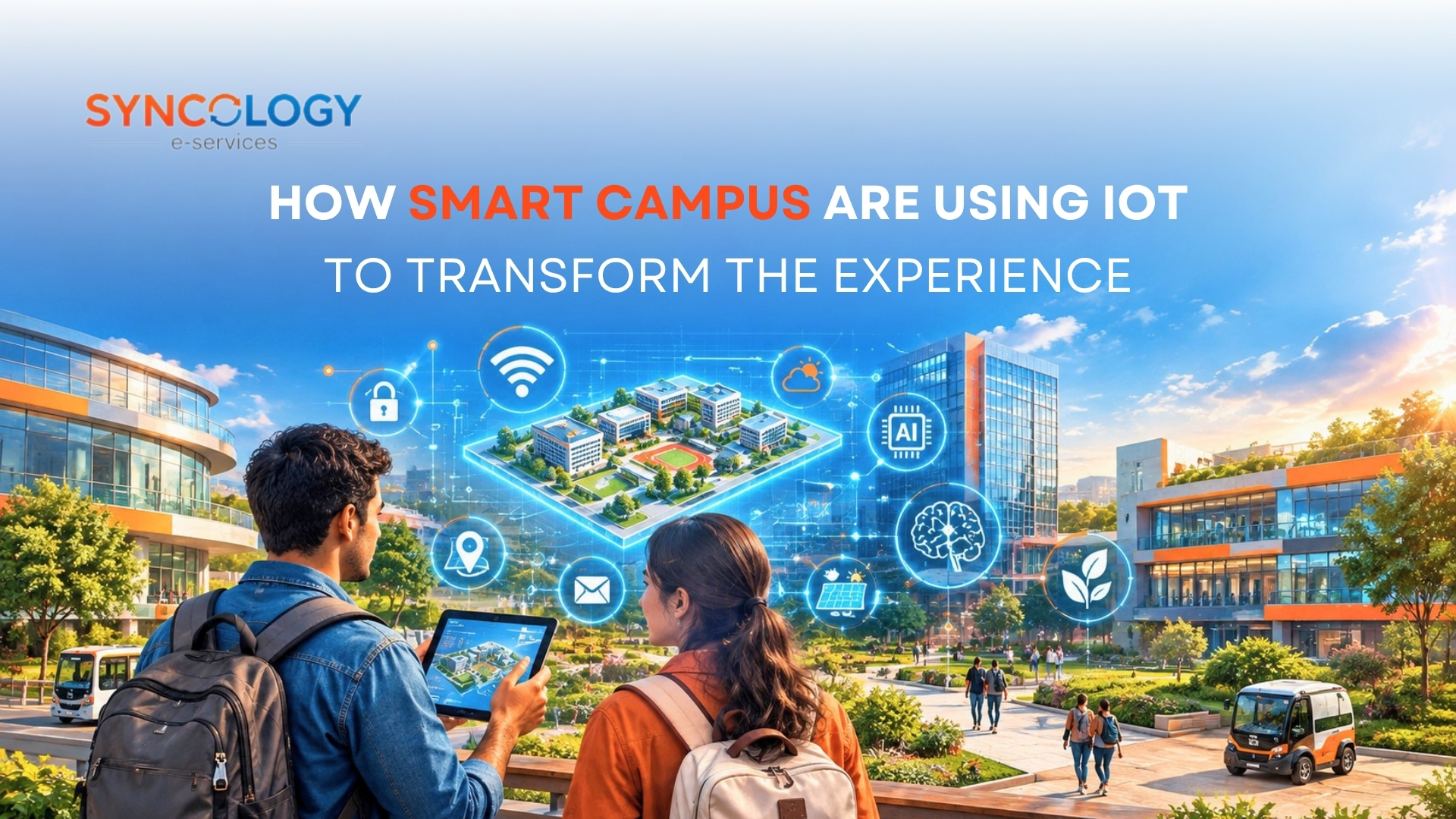

A smart campus connects the physical environment of a school with Internet of Things (IoT) devices, intelligent systems, and digital platforms to create a safer, more efficient, and data-driven educational experience. For decades, educational institutions operated as disconnected physical spaces. Classrooms were enclosed boxes, attendance was recorded on paper, security cameras stored passive footage on dusty hard drives, and facility management was reactive—meaning administrators only fixed lights, air conditioning, or plumbing after someone complained. Today, the rapid advancement of school IoT solutions is rewriting this operational playbook.
Transitioning to a connected school involves much more than simply mounting digital whiteboards on walls or giving tablets to students. It requires weaving connected hardware, sensors, cameras, attendance systems, building automation, and school management software into a unified digital ecosystem. In this environment, every physical asset generates actionable data.
When a student enters the building, an RFID tag or facial recognition camera logs their arrival. When a classroom empties, an occupancy sensor signals the thermostat to dial back the HVAC. When smoke is detected, automated alerts fire off instantly to security staff and emergency responders. By bridging the physical-digital divide, a smart campus transforms traditional schools into responsive, intelligent organizations. This article explores how these connected technologies operate, how they integrate with a central school management system, what implementations actually cost, and how institutions can build a cohesive strategy rather than a patchwork of isolated gadgets.
What Is a Smart Campus? The IoT-Powered School
A smart campus represents a fundamental evolution in how educational facilities function, moving away from isolated physical infrastructure toward an intelligent, interconnected environment. To understand this shift, it is helpful to contrast the traditional school model with an IoT-powered ecosystem. A traditional school relies on physical infrastructure, disconnected security or attendance systems, and manual processes where data remains trapped in paper binders or siloed spreadsheets. In contrast, a smart campus leverages IoT sensors, connected hardware, centralized data streams, automated workflows, advanced analytics, and integrated school management software to harmonize every aspect of campus life.
At its core, the IoT ecosystem within a smart school follows a continuous loop:
- Devices: Smart sensors, cameras, meters, and badge readers capture real-world physical states.
- Connectivity: Wi-Fi, Ethernet, and specialized IoT gateways transmit this raw data securely.
- Data: Cloud platforms aggregate and process the incoming telemetry streams.
- Software: School management systems and analytics dashboards interpret the data.
- Automation: Pre-configured rules trigger automated actions, such as adjusting air conditioning or sending parent alerts.
- Decision-Making: Administrators review consolidated analytics to make strategic operational choices.
Consider the diverse array of hardware deployed across modern smart school technology deployments. Smart attendance devices, including RFID card readers and biometric scanners, track student movement at entry points. IP-based closed-circuit television (CCTV) cameras powered by AI video analytics monitor corridors and perimeters. Environmental sensors track temperature, humidity, and air quality inside classrooms. Smart lighting and IoT-enabled HVAC systems control utility usage dynamically. Meanwhile, connected fire detection units, smart energy meters, and panic buttons form a robust safety net.
Crucially, installing individual smart devices does not automatically create a smart campus. A school can install biometric readers, modern surveillance cameras, and smart thermostats, yet remain entirely inefficient if those systems operate on separate, incompatible networks. The real value of a smart campus emerges only when these hardware elements are connected to a centralized platform, transforming disparate data points into a unified operational picture.
IoT for Attendance: RFID, Facial Recognition & Smart Cards
Automating attendance is often the first major step a smart campus takes toward digital transformation, replacing error-prone manual rolls with real-time digital tracking. Modern schools deploy several distinct identification technologies to streamline daily operations, each offering unique advantages and trade-offs.
RFID Systems
RFID technology relies on plastic cards or wearable tags embedded with radio-frequency chips. When students pass through entry gates equipped with RFID readers, their attendance is logged instantly.
- Main Advantage: Exceptional speed, making it ideal for high-volume student attendance in large schools where hundreds of students enter within a narrow morning window.
- Main Challenge: The potential for card sharing, where a student brings a friend’s card to log attendance for them.
- Best Use: Large schools prioritizing fast, frictionless entry at perimeter gates.
Facial Recognition
Facial recognition leverages biometric cameras and edge computing to verify student identities instantly without requiring physical tokens.
- Main Advantage: Completely contactless verification that eliminates the dependency on physical cards and stops proxy attendance entirely.
- Main Challenge: Higher upfront hardware costs and strict privacy and biometric-data considerations.
- Best Use: High-security environments or specialized academies where absolute identity verification is mandatory.
Smart Cards
Smart cards integrate RFID chips with secure internal memory, allowing them to serve multiple functions beyond simple entry logging.
- Main Advantage: Multi-purpose functionality; the same card can handle attendance, campus access control, library checkouts, and cashless cafeteria purchases.
- Main Challenge: Requires robust card management software to handle issuance, replacements, and permission updates.
- Best Use: Connected campuses looking for a unified student credential across various on-site services.
| Technology | Main Advantage | Main Challenge | Best Use |
| RFID | Fast identification | Card sharing | Large schools |
| Facial Recognition | Contactless verification | Privacy / infrastructure | High-security environments |
| Smart Cards | Multiple campus uses | Card management | Connected campuses |
No single technology is universally superior for every school. Administrators must weigh factors such as student population size, existing network infrastructure, budget constraints, and regional privacy regulations before selecting an attendance automation model.
Smart CCTV: AI-Powered Security Systems for Schools
Surveillance infrastructure in schools has undergone a massive paradigm shift. Traditional CCTV systems operated on a passive model: cameras recorded video feeds onto local hard drives, storing data that administrators reviewed only after an incident had already occurred. In a modern smart campus, passive recording has given way to intelligent, AI-powered video analytics that transform cameras into active safety sentinels.
Powered by edge computing and IP camera networks, smart CCTV systems perform continuous analysis on video feeds. Instead of merely storing pixels, these systems detect motion, flag restricted-area breaches during off-hours, and identify unusual crowd gatherings or aggressive behavior in real time. When an anomaly is detected, the system generates automated alerts, notifying security personnel instantly and integrating directly with campus access control systems to lock doors or track movement paths.
Deploying AI surveillance in an educational setting, however, requires careful governance. Protecting student privacy is paramount. Schools must establish rigorous data governance policies covering:
- Restricting video feed access strictly to authorized security personnel.
- Enforcing automated data retention limits, ensuring footage is securely purged after a set number of days.
- Strategic camera placement to cover common areas, perimeters, and hallways while respecting private zones like restrooms or locker rooms.
- Transparent communication with parents and staff regarding how biometric or facial video data is processed.
- Strict compliance with local data protection and privacy regulations.
When governed responsibly, smart CCTV shifts school security from a reactive forensics tool into a proactive shield that deters incidents before they escalate.
Building Automation: Lighting, AC & Energy Management
Physical infrastructure represents one of the largest overhead costs for any educational institution. Energy waste resulting from empty classrooms, running air conditioning units in unoccupied administrative wings, and leaving hallway lights on overnight places an unnecessary financial burden on school budgets. A smart campus addresses this inefficiency through automated building management.
By integrating IoT sensors with school automation hardware, institutions can govern physical utilities dynamically. Core components include:
- Motion and Occupancy Sensors: Detect whether a space is actively in use.
- Smart Thermostats and HVAC Monitors: Adjust heating and cooling output based on real-time occupancy and weather forecasts.
- Smart Lighting: Dims or turns off lights automatically when natural daylight is sufficient or rooms are vacant.
- Energy Meters: Track kilowatt-hour consumption across individual zones or buildings.
- Automated Scheduling: Programs utility operations around school calendars, weekends, and holidays.
Consider a practical scenario: A secondary school science laboratory is scheduled for a chemistry session at 10:00 AM, but the class is canceled due to a field trip. As the room remains vacant past the threshold time, the room’s occupancy sensor flags the absence to the central building automation controller. The system automatically adjusts the HVAC setpoint to an energy-saving idle mode and turns off the overhead smart lighting.
This level of automation yields tangible operational benefits, including reduced energy waste, streamlined facility maintenance, improved thermal comfort for students, and precise visibility into utility consumption trends. By relying on data rather than guesswork, facility managers can optimize operations across the entire campus.
IoT Fire Safety & Emergency Alert Systems
In an emergency, seconds matter. Traditional school safety protocols relied on manual fire pull stations, standalone alarm bells, and PA announcements that often suffered from delays or confusion during chaotic moments. A smart campus integrates fire detection and emergency alert infrastructure into a responsive digital nerve center.
The modern safety ecosystem relies on interconnected smart smoke detectors, high-sensitivity heat sensors, digital fire alarm panels, emergency panic buttons, and automated broadcast systems. When an incident occurs, the technology executes a rapid, multi-step workflow:
Sensor Detects Event⟶System Verifies & Flags⟶Alert Generated⟶Personnel Notified⟶Emergency Response Begins
For instance, if a smart smoke detector in a dormitory corridor registers particulate elevation, it immediately pings the central monitoring platform. The system cross-references data from nearby heat sensors to verify whether a genuine fire hazard exists, eliminating false alarms caused by dust or steam. Once verified, the platform automatically triggers localized audio-visual alarms, sends emergency push notifications to security managers and local emergency responders, unlocks electronic exit doors to facilitate evacuation, and displays evacuation routing paths on security dashboards.
While this technology drastically reduces response times, administrators must remember that technology supports—rather than replaces—established safety protocols. Regular physical drills, maintenance checks, and staff training remain vital components of any comprehensive school safety plan.
Connecting IoT Data to Your School Management System
The true differentiator of a modern smart campus is not the individual smart device, but the integration architecture that binds them together. Deploying isolated IoT sensors—such as an independent attendance reader or a standalone energy meter—creates limited value because the data remains trapped in vendor-specific silos. The transformative opportunity lies in connecting IoT data directly to the school’s core administrative software.
Achieving a unified ecosystem requires robust API integrations linking IoT platforms with key administrative software:
- School Management System (SMS): The operational core that aggregates daily workflows.
- Student Information System (SIS): Manages student demographics, grades, and disciplinary records.
- Learning Management System (LMS): Tracks academic engagement and digital coursework.
- Parent Portal: Provides families with transparent access to attendance, alerts, and school updates.
- HR and Payroll: Manages staff attendance, substitution scheduling, and staff hours.
- Financial / ERP Systems: Connects facility usage costs and supply chain logistics.
To visualize this integration in practice, consider two everyday school workflows:
Workflow A (Attendance & Parent Engagement): A student walks through the smart gate; the RFID/facial system logs the entry timestamp. The IoT gateway pushes this event via API to the School Management System. The SMS updates the student’s daily attendance record, triggers an automated parent notification via SMS or portal push if the student is marked tardy, and updates the administrative attendance dashboard in real time. If unexcused absences accumulate over three consecutive days, the system flags the profile for the school counselor.
Workflow B (Facility Optimization): An IoT energy meter and smart thermostat in the gymnasium monitor abnormal power consumption spikes during off-hours. The sensor relays this data to the central facility dashboard. The facility manager receives an automated alert indicating potential equipment malfunction, allowing maintenance staff to dispatch a repair ticket before a complete HVAC failure disrupts the athletic schedule.
By centralizing visibility, eliminating manual data entry, accelerating alerts, and producing cross-system operational analytics, integrated school IoT solutions turn raw hardware data into institutional intelligence.
Cost of Building a Smart Campus: What to Budget
When school owners and financial decision-makers evaluate the investment required for a smart campus, they must look far beyond the initial price tag of individual hardware units. Building a connected educational environment involves several distinct cost layers that must be planned carefully during the budgeting phase.
- 1. Hardware: The physical devices deployed across the campus, including RFID readers, ID cards, smart CCTV cameras, environmental sensors, smart meters, and fire-safety units.
- 2. Connectivity: The underlying network infrastructure required to keep devices communicating, including enterprise Wi-Fi access points, structured Ethernet cabling, IoT gateways, and robust internet bandwidth.
- 3. Software: Licensing for IoT management platforms, school management system modules, analytical dashboards, and custom integration tools.
- 4. Installation: Professional deployment fees, physical mounting, device configuration, network commissioning, and system testing.
- 5. Maintenance: Ongoing hardware replacement reserves, firmware updates, device monitoring, and technical support service-level agreements.
- 6. Security: Investments in network hardening, device authentication protocols, access controls, and data encryption to safeguard against cyber threats.
| Cost Area | What to Consider |
| Hardware | Devices, sensors, cameras, and gate readers |
| Infrastructure | Network cabling, Wi-Fi access points, and gateways |
| Software | Management platforms, dashboards, and licenses |
| Integration | Connecting APIs across disparate systems |
| Installation | Professional deployment, configuration, and testing |
| Maintenance | Long-term support, firmware updates, and replacements |
| Security | Protecting hardware, network boundaries, and student data |
When budgeting for smart school technology, leadership teams should evaluate the Total Cost of Ownership (TCO) over a five-to-ten-year horizon. While upfront capital expenditure may appear substantial, operational savings from automated energy management, reduced administrative overhead, and streamlined facility upkeep consistently offset initial costs over time.
Syncology’s Integrated Hardware Solutions for Smart Schools
Transitioning an educational institution into a fully realized smart campus requires a cohesive technology partner capable of bridging the gap between physical hardware and digital management software. Rather than forcing schools to cobble together disparate devices from multiple vendors, Syncology provides an integrated approach that connects smart hardware directly into a unified school management ecosystem.
At the heart of Syncology‘s philosophy is a simple truth: hardware is only as valuable as the software that interprets its data. For example, installing RFID gate readers is helpful, but RFID becomes exponentially more valuable when attendance data flows seamlessly into the school’s central management system, instantly updating student records, notifying parents, and feeding administrative analytics dashboards without human intervention.
Syncology supports modern educational institutions by aligning core operational capabilities:
- Smart Attendance & Access Control: Seamlessly capturing student and staff movement through RFID, smart cards, and automated entry points.
- CCTV & Security Integration: Bridging intelligent surveillance feeds with campus security workflows.
- Unified School Management System (SMS): Serving as the single source of truth for administrative, academic, and operational data.
- Building & IoT Integrations: Aggregating data streams from environmental sensors, smart meters, and automated utilities into centralized management dashboards.
- Automated Notifications & Reporting: Empowering staff with real-time parent messaging and deep operational analytics.
By combining robust hardware with an integrated software core, Syncology helps private and international schools avoid the pitfalls of technology silos, ensuring that every connected device contributes to a smarter, safer, and more efficient campus experience.
Conclusion
A smart campus is not defined by the sheer quantity of digital devices installed across its grounds. The true measure of an intelligent school lies in how effectively those technologies work together to create a cohesive, responsive ecosystem. As educational institutions navigate digital transformation, the integration of IoT attendance systems, smart security, building automation, and fire safety into a centralized school management system is no longer a futuristic luxury—it is an operational necessity.
Building this connected environment requires deliberate planning across hardware selection, network infrastructure, software integration, cybersecurity, and cost management. By structuring smart-campus strategies around specific operational problems and measurable outcomes rather than chasing technology trends for their own sake, school owners and administrators can unlock new levels of efficiency, enhance campus safety, and elevate the student experience.
Contact us for More Details!
FAQ about the Smart Campus:
- What is a Smart Campus?
A smart campus is an educational institution that connects its physical infrastructure with IoT devices, sensors, and centralized software. It transforms traditional, siloed school operations into an intelligent ecosystem that automates workflows, enhances campus safety, optimizes energy use, and drives data-backed decision-making.
- How does IoT work in schools?
IoT (Internet of Things) works by embedding physical devices—such as attendance readers, cameras, and environmental sensors—with connectivity features. These devices collect real-time data from the physical environment, transmit it over secure networks to cloud platforms, and feed it into school management software to trigger automated actions.
- What IoT devices can schools use for attendance?
Schools commonly use RFID card readers, biometric fingerprint scanners, and AI-powered facial recognition cameras. These devices automate the attendance tracking process, logging student entry and exit times instantly while feeding the records directly into the school’s administrative databases.
- How can smart CCTV improve school security?
Smart CCTV goes beyond traditional passive recording by incorporating AI video analytics. These cameras can detect motion in restricted zones, identify unusual crowd behavior, flag security anomalies in real time, and trigger automated alerts to security personnel to prevent incidents before they escalate.
- How much does it cost to build a Smart Campus?
The cost depends on the scope of implementation, school size, and existing infrastructure. Total budgeting must account for multiple layers, including physical hardware, network connectivity, software licenses, professional installation, ongoing maintenance, and cybersecurity measures evaluated through a Total Cost of Ownership framework.
- Can IoT devices integrate with a School Management System?
Yes. Modern smart-campus solutions rely on API integrations to connect IoT hardware—such as attendance gates and energy meters—directly to the School Management System (SMS). This integration eliminates manual data entry, provides centralized visibility, and ensures data flows smoothly across all departments.
- What should schools consider before implementing IoT?
Before deploying IoT, schools should evaluate their underlying network infrastructure, budget for Total Cost of Ownership, establish strict data privacy and cybersecurity protocols, and define clear operational goals to ensure that newly installed technologies solve specific administrative or educational challenges.