
School building automation provides educational institutions with a structured approach to monitoring and controlling essential infrastructure through connected devices, sensors, controllers, and centralized software. Every school day involves a complex sequence of operational demands: classrooms must maintain comfortable temperatures, corridors require reliable illumination, and daily schedules dictate the movement of hundreds or thousands of students and staff members. When these vital functions operate independently, facility management teams frequently encounter unnecessary manual workloads, inconsistent environmental settings, and limited visibility into overall building performance.
Educational environments present unique operational challenges because occupancy patterns fluctuate widely across different zones. Classrooms, science laboratories, gymnasiums, cafeterias, administrative offices, and shared auditoriums have distinct operating hours and environmental requirements. Without centralized coordination, managing these spaces often requires manual intervention from facility staff who must adjust thermostats, check lighting circuits, and update schedules building by building. This article examines how implementing structured control systems helps facility teams streamline operations, explores core applications such as lighting, HVAC, energy tracking, and bell scheduling, and outlines key implementation considerations. It is important to note that results depend heavily on existing infrastructure, equipment compatibility, and ongoing management; automation is not a universal fix for underlying maintenance deficiencies or building design limitations.
Smart Building Automation for Schools: Lighting, HVAC & Control
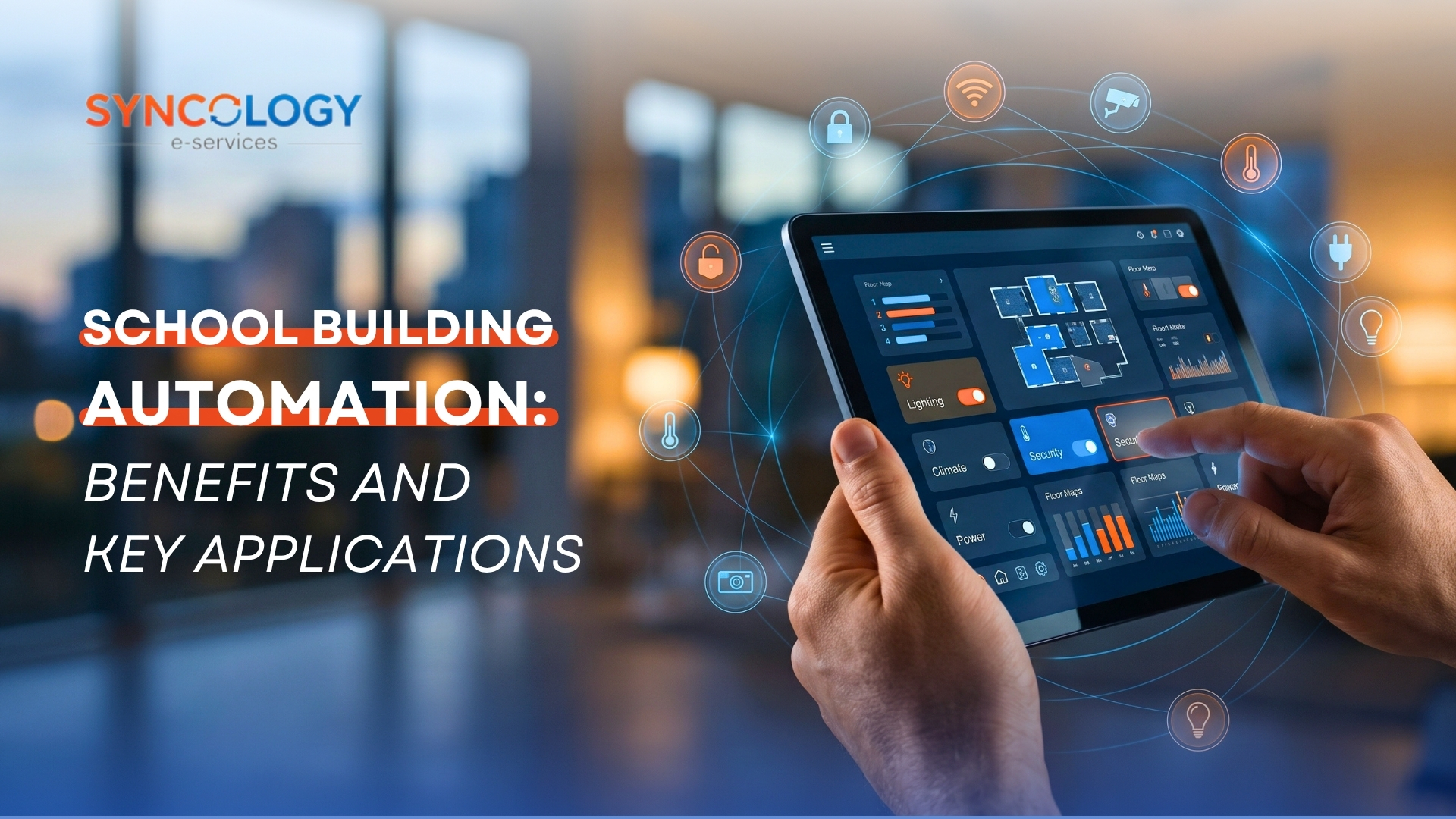
Smart building automation for schools transforms how educational facilities manage environmental conditions by connecting disparate building services into unified monitoring and control interfaces. Modern educational facilities rely on a network of sensors, programmable controllers, and automated actuators to govern building systems without constant manual oversight. Rather than requiring staff members to physically adjust switches or valves across multiple campus buildings, smart building automation aggregates these touchpoints into centralized software environments where authorized personnel can review status indicators and adjust operational rules.
A core strength of this technological approach lies in its ability to respond dynamically to changing conditions. Programmable logic allows systems to execute predefined commands based on time-of-day schedules, occupancy feedback, or environmental sensor readings. For instance, a school facility may require fully conditioned and illuminated classrooms during instructional hours, a lower-energy holding mode during afternoon cleaning shifts, and a secure setback state overnight or during weekends and holidays. By establishing these automated routines, schools can maintain more consistent indoor conditions while reducing the frequency of repetitive manual adjustments.
However, administrators must distinguish between centralized visibility and absolute remote control. Not every legacy device within an older educational facility can be retrofitted for remote adjustment. Equipment compatibility, wiring infrastructure, and controller capabilities dictate the extent to which systems can be monitored or modified. Establishing clear operational expectations ensures that facility teams utilize smart building automation effectively to support daily educational activities.
What Is Building Automation?
A building automation system (BAS) is a centralized, interconnected network of hardware and software designed to monitor, schedule, and control building services automatically according to programmed rules, operator commands, or sensor inputs. To understand how school building automation functions in practice, it is helpful to examine its primary architectural components:
- Sensors: These input devices measure physical conditions such as ambient temperature, relative humidity, occupancy status, or light levels depending on the specific design and objectives of the installation.
- Controllers: Acting as the processing core, programmable controllers receive data inputs from sensors, evaluate them against programmed logic, and determine the appropriate response.
- Actuators and Controlled Equipment: These output devices carry out the controller’s commands, such as adjusting a motorized air damper, modulating a valve, or switching an electrical circuit.
- Centralized Interface: Software dashboards or control panels provide authorized facility staff with real-time system visibility, alarm notifications, and configuration tools.
- Schedules and Automation Rules: Time-based calendars and conditional logic scripts dictate when equipment operates and how it reacts to environmental changes.
It is essential to clarify the terminology used across the building technology sector. While a building automation system (BAS) and a building management system (BMS) are often discussed interchangeably, terminology varies among vendors and regional markets. Furthermore, installing a collection of disconnected smart devices—such as standalone programmable thermostats or Wi-Fi light switches—does not constitute a comprehensive building automation system. True building automation relies on centralized coordination where multiple subsystems communicate and operate under unified scheduling and control logic.
In a practical school setting, this means the system can automatically switch off lighting circuits in wings scheduled for afternoon closure, pre-condition HVAC zones before the first morning bell, or adjust operating parameters during extended school breaks. Implementing school building automation requires careful coordination between IT infrastructure and physical plant management to ensure reliable, secure, and predictable performance.
Applications in Schools
The practical applications of school building automation span numerous operational domains, helping facility managers maintain safe, comfortable, and well-coordinated environments. Selecting the most appropriate applications depends heavily on a school’s architectural layout, existing mechanical infrastructure, occupancy patterns, and institutional priorities. Educational facilities rarely need to implement every possible feature simultaneously; instead, they often adopt a phased approach, beginning with high-impact areas before expanding system scope.
The primary application areas typically integrated within educational facilities include:
- Lighting and HVAC Control: Managing illumination levels and thermal comfort across classrooms, administrative offices, and shared spaces according to precise occupancy and timetable schedules.
- Energy Management: Tracking utility consumption patterns, identifying abnormal energy spikes, and optimizing equipment operating hours to eliminate unnecessary power usage.
- Automated Bell Scheduling: Coordinating school-day transition signals, class periods, and administrative announcements reliably across campus audio systems.
By deploying school building automation across these core areas, educational institutions can establish structured operational workflows that reduce manual intervention while supporting a dependable learning atmosphere for students and educators.
Lighting & HVAC Control
Environmental control represents one of the most visible and complex operational responsibilities within any educational facility. Effective school building automation helps facility teams manage lighting and heating, ventilation, and air conditioning (HVAC) systems through coordinated schedules, sensor feedback, and centralized oversight.
Lighting Control
Illumination plays a direct role in classroom focus, visual comfort, and campus safety. Automated lighting controls can manage fixtures across diverse school zones through several mechanisms:
- Scheduled Illumination: Programming lighting circuits to match standard instructional hours, cleaning shifts, and evening facility rentals.
- Occupancy Sensors: Utilizing motion or presence detectors to dim or switch off lights in spaces like store rooms, staff lounges, and meeting rooms when unoccupied.
- Daylight-Responsive Controls: Adjusting electric lighting output in perimeter rooms where architectural design allows natural daylight to supplement indoor illumination.
- Tailored Operational Profiles: Establishing different lighting configurations for regular lessons, examinations, after-school clubs, and holidays.
Sensors and automated shut-off timers must be calibrated carefully. If time delays are configured incorrectly or sensors are placed poorly, lights may switch off prematurely while a classroom is still occupied, causing disruption and frustration for teachers and students.
HVAC Control
Heating, ventilation, and air conditioning systems consume a significant portion of an educational institution’s energy budget. School building automation helps regulate these systems by:
- Zone-Based Scheduling: Programming specific HVAC setpoints for classrooms, administrative blocks, gymnasiums, and auditoriums based on actual building usage patterns.
- Occupancy Integration: Leveraging schedule data and occupancy feedback to reduce conditioning in temporarily empty zones without compromising baseline indoor air quality.
- Abnormal Status Alerts: Notifying maintenance staff when equipment fails to reach target temperatures or exhibits unusual runtime behaviors.
HVAC automation must never override statutory ventilation requirements or compromise indoor air quality. Maintaining healthy air exchange rates remains paramount in educational settings, and thermal control strategies must always balance energy efficiency with student health and safety regulations.
Energy Management
Energy management within educational facilities requires clear visibility into utility consumption, rigorous operational discipline, and continuous data review. School building automation supports energy management by transforming abstract utility bills into actionable operational insights, allowing facility teams to monitor performance and evaluate consumption trends over time.
Effective energy management practices supported by automation include:
- Consumption Monitoring: Utilizing compatible meters, submeters, and connected equipment to track electricity, water, or gas usage across different campus zones. Granular data visibility depends entirely on the quality and placement of the installed metering hardware.
- Schedule Alignment: Ensuring that HVAC, lighting, and auxiliary equipment operate strictly during verified occupancy windows rather than running continuously by default.
- Identifying Waste: Helping facility teams investigate anomalies, such as equipment running outside scheduled hours or unexplained baseline power consumption in specific wings.
- Performance Comparisons: Evaluating energy consumption trends across different billing cycles, seasonal shifts, or campus buildings when comparable data is available.
- Maintenance Support: Recognizing that sudden increases in energy consumption or extended equipment runtimes can indicate mechanical wear or failing components, prompting proactive service requests.
It is important to distinguish between energy monitoring and energy optimization. Monitoring provides visibility and data transparency, whereas actual efficiency improvements depend entirely on how facility teams interpret that data, adjust control parameters, and service underlying equipment. Furthermore, schools should avoid relying on generalized claims of guaranteed energy savings or fixed payback periods. Results vary significantly based on baseline building efficiency, local climate conditions, occupant density, and the rigor of ongoing system management. Integrating school building automation into daily operations provides the data foundation necessary to make informed facility decisions.
Automated Bell Scheduling
Coordinating the daily rhythm of an educational institution requires precise timing for class transitions, recess, lunch periods, and administrative announcements. Automated bell scheduling simplifies this responsibility by synchronizing campus bells and audio signals with an approved institutional timetable.
Core capabilities of automated bell systems include:
- Timetable Programming: Defining recurring bell schedules for standard instructional periods, shortened days, and special event schedules.
- Calendar Management: Automatically switching between standard term schedules, examination periods, national holidays, and seasonal variations such as modified hours during Ramadan.
- Reliability and Consistency: Eliminating dependence on manual bell activation by staff members, thereby reducing timing discrepancies between different buildings or campus wings.
- Access Control and Oversight: Ensuring that only authorized personnel can modify bell schedules, preventing unauthorized changes that could disrupt school operations.
- Manual Override and Contingency: Retaining appropriate manual override options or backup procedures to ensure bells can still be managed during network outages or special circumstances.
Automated bell scheduling is a specialized application that operates either through dedicated scheduling controllers, integrated school audio equipment, or software coordination with broader control platforms. Schools must verify hardware compatibility and integration pathways before assuming centralized management is available across legacy infrastructure. When implemented correctly within a school building automation framework, automated scheduling ensures that daily transitions proceed smoothly across the entire educational facility.
Cost & Operational Benefits
Implementing school building automation delivers tangible operational and financial advantages, provided the installation matches the institution’s scale and technical capacity. Rather than viewing automation as a standalone expense, school leaders evaluate these projects through the lens of total operational value and long-term facility sustainability.
Key Operational and Financial Benefits
- Reduced Manual Workload: Automated schedules and sensor-based controls minimize repetitive manual tasks for facility staff, freeing up time for proactive maintenance and repair work.
- More Consistent Operations: Predefined rules and centralized schedules help standardize environmental conditions and equipment runtimes across multiple campus buildings.
- Potential Energy Efficiency: Limiting avoidable equipment operation and refining scheduling parameters can reduce unnecessary power consumption, though specific outcomes vary by facility.
- Improved Operational Visibility: Centralized dashboards allow staff to review supported equipment status and identify operational alarms before they escalate into major failures.
- Informed Maintenance Planning: Operating logs, run-hour tracking, and diagnostic alerts help maintenance teams prioritize inspections and service interventions effectively.
- Scalability: Schools can begin by automating high-priority zones or systems, expanding their infrastructure incrementally as budgets and operational needs evolve.
Key Cost Factors to Evaluate
- Initial Assessment and Design: Professional engineering evaluations, facility audits, and system architecture planning.
- Hardware Procurement: Investment in sensors, controllers, meters, actuators, and enclosure panels.
- Software and Licensing: Centralized management software, user licenses, and system configuration fees.
- Infrastructure Upgrades: Cabling, networking equipment, power supplies, and gateway devices required for communication.
- Installation and Commissioning: Professional labor for physical mounting, wiring, point-to-point testing, and system tuning.
- Ongoing Maintenance: Software updates, technical support agreements, calibration services, and eventual hardware replacement.
Evaluating total cost of ownership ensures that schools select solutions appropriate for their physical plant and financial capacity. Defining clear success criteria prior to implementation—such as tracking maintenance ticket resolution times, monitoring manual intervention frequencies, or auditing equipment runtimes—helps educational leaders measure the true impact of school building automation over time.
Integration With Other Systems
Modern educational facilities rely on diverse digital platforms and physical infrastructure. For school building automation to deliver maximum operational value, it must often exchange data and coordinate commands with other building systems. However, true integration depends entirely on hardware compatibility, shared communication protocols, network security, and professional configuration.
Key integration pathways include:
- HVAC and Lighting Coordination: Linking thermal controls and illumination schedules to operate under unified occupancy rules.
- Energy Metering Platforms: Consuming real-time utility data within centralized dashboards to track resource consumption trends.
- Sensor Networks: Integrating environmental and occupancy feedback loops to drive automated control logic.
- Audio and Bell Systems: Synchronizing automated scheduling platforms with campus communication systems.
- Building Management Platforms (BMS): Consolidating diverse environmental services into a single supervisory interface.
- Facility Management Software: Connecting equipment alarm data and operating alerts directly into maintenance ticketing workflows.
Facility managers must recognize the fundamental difference between system integration and simple coexistence. Installing two independent technological systems in the same building does not mean they can automatically communicate or share control logic. Interoperability requires compatible communication protocols (such as BACnet or Modbus), open application programming interfaces (APIs), and meticulous configuration.
Furthermore, safety, cybersecurity, and resilience remain paramount. Critical life-safety systems—such as fire alarm panels, emergency smoke evacuation controls, and security access networks—must retain independent safeguards and comply strictly with local regulatory codes. General-purpose automation platforms must never override certified life-safety infrastructure. Ensuring that school building automation is implemented by qualified professionals guarantees a secure, resilient, and fully compliant facility network.
Conclusion
School building automation offers educational institutions a structured methodology for coordinating lighting, HVAC, energy tracking, and routine schedules while providing much-needed visibility into daily facility operations. Schools do not need to automate every building service immediately; a practical, phased approach begins by assessing existing physical infrastructure, identifying recurring operational bottlenecks, and selecting compatible technologies that align with long-term institutional goals.
As educational leaders and facility administrators explore ways to modernize their campuses, integrating connected building controls represents a valuable step toward operational efficiency. Discover how digital solutions and integrated educational platforms can support your institution’s broader operational and management goals by visiting Syncology to discuss your school’s unique transformation roadmap today.
Frequently Asked Questions
1. What is school building automation?
School building automation is the centralized monitoring and control of educational facility infrastructure—such as lighting, HVAC, and scheduled operations—using connected sensors, controllers, and automated software to streamline daily plant management.
2. What are the main benefits of building automation in schools?
Key benefits include reduced manual workloads for facility staff, more consistent environmental conditions, improved visibility into energy consumption, and streamlined coordination of routine campus schedules.
3. How does school building automation control lighting and HVAC?
It utilizes programmable schedules, occupancy sensors, and automated controllers to adjust lighting circuits and HVAC operating parameters dynamically based on actual occupancy and time-of-day requirements.
4. Can building automation reduce energy costs in schools?
Yes, scheduling and monitoring tools help identify and eliminate unnecessary equipment runtimes, though actual energy savings depend heavily on building baseline performance, climate, and equipment efficiency.
5. Can school bells be automated?
Yes, automated bell scheduling coordinates class transition signals according to approved timetables, though implementation requires a compatible controller or audio-system integration.
6. Can building automation integrate with existing school systems?
Integration is possible when hardware and software platforms share compatible communication protocols and open interfaces, which must be assessed during the initial design phase.
7. How much does school building automation cost?
Costs vary based on building size, required hardware, networking infrastructure, software licensing, installation labor, and ongoing maintenance agreements, requiring careful total cost of ownership evaluation.
8. Is building automation suitable for small schools?
Yes, smaller educational facilities can prioritize specific high-impact operational needs and adopt school building automation in stages tailored to their existing budget and infrastructure.