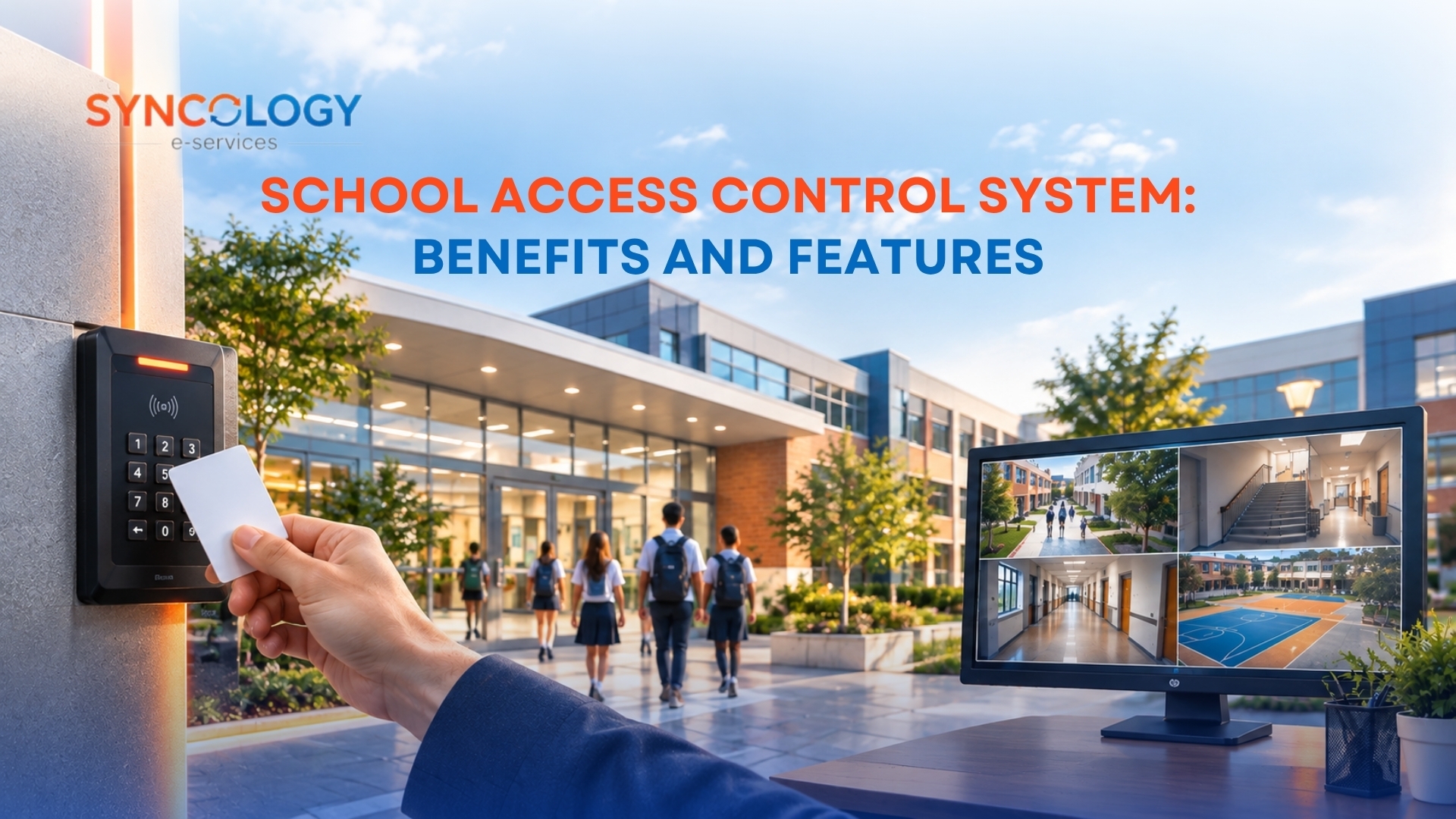

A school access control system plays a vital role in managing who enters school premises, when they arrive, and which specific zones they can navigate. When schools rely solely on manual entry procedures, they frequently encounter significant operational challenges. These include overcrowded school entrances, inconsistent visitor records, heightened unauthorized access risks, and continuous difficulties in coordinating accurate attendance information. Modern access control technologies help educational institutions organize entry procedures, establish granular access permissions, and maintain reliable electronic records. Today’s options typically include biometric identification, facial recognition, smart cards, access credentials, and electronic gates. They also connect seamlessly with student attendance management systems while serving as a pillar of wider student protection plans. However, selecting the right solution depends heavily on school size, entrance design, budget, operational requirements, privacy considerations, and existing school IT infrastructure. Understanding how a school access control system operates is the essential first step toward selecting an appropriate physical and digital solution.
What Is a School Access Control System?
A school access control system is a specialized security and management framework that determines who is permitted to enter a building, pass through a designated entryway, or access a restricted campus area. Unlike basic attendance tracking or general security monitoring, this technology actively governs physical movement across school grounds. The core purpose of a school access control system is to regulate flow and protect sensitive zones by automating entry permissions.
At its operational core, the process involves presenting a credential, verifying identity, checking pre-configured access rules, and granting or denying entry in real time. The main physical and digital components include access credentials, biometric readers, card readers, electronic locks or gates, specialized access control software, and secure event logs.
Access permissions can be tailored precisely for different groups, including students, teachers, administrative staff, visitors, contractors, and other authorized individuals. Authorized school personnel can manage these rules and review entry records from a central administrative interface.
It is important to distinguish access control from attendance management. While a school access control system records physical entry events, attendance management software records and processes formal classroom attendance according to institutional rules. While connected, they are not interchangeable. Similarly, access control differs from CCTV monitoring; controlling physical entry is distinct from recording visual events through cameras, though both systems complement an effective school security system.
Common applications across educational facilities include main campus gates, staff entrances, administrative offices, science laboratories, IT server rooms, and libraries. Depending on institutional needs, a school access control system can be implemented at a single main entrance or scaled across multiple campus buildings. Evaluating these foundational concepts helps decision-makers prepare to review available technologies.
School Access Control System Available Technologies
Different educational institutions require distinct entry methods based on security specifications, student age groups, visitor volume, entrance layouts, and budget limitations. A flexible school access control system can incorporate various verification tools to match these unique environmental requirements.
The primary technologies available include biometric identification, facial recognition, smart cards, and electronic gates. Biometrics identify users through unique physical characteristics, while smart cards utilize assigned credentials to verify permissions. Electronic gates regulate physical passage through designated entry points when triggered by verified access hardware.
Schools can deploy these technologies individually or combine them into a multi-layered school entry management system. For instance, staff might use smart cards, older students use alternative credentials, and visitors follow a supervised reception workflow. Prior to selection, institutions must carefully assess reliability, processing speed, accessibility standards, privacy regulations, maintenance costs, and integration requirements.
Biometrics & Face
Biometric technology has transformed how institutions approach security. Biometric access control verifies individual identity using measurable physical characteristics, with fingerprint recognition and facial recognition being the two most prominent approaches. While both rely on biological data, their hardware requirements, scanning speeds, and implementation considerations differ significantly.
Facial recognition works by capturing a digital image, analyzing distinct facial features, comparing them against an enrolled reference template, and returning a verification result. System performance depends heavily on environmental lighting, positioning conditions, software configuration, and the overall quality of enrollment data.
The potential benefits for educational institutions are notable. A biometric school access control system can reduce dependence on physical cards that students frequently lose or forget. It supports rapid verification at high-volume entry points and helps automate identity validation. Furthermore, when connected to access management software, it records precise entry events and reduces credential sharing, though no technology completely eliminates human error or intentional bypass.
Despite these advantages, implementation challenges exist. False acceptance or rejection rates can disrupt morning arrival flows if equipment is poorly calibrated. Equipment acquisition and installation costs are higher than standard card readers, and initial enrollment procedures require significant administrative time. Regular maintenance is necessary, and schools must always plan for alternative entry arrangements when biometric verification fails due to technical errors or physical changes.
Privacy and data protection represent critical considerations. Biometric data is sensitive, requiring strict legal compliance, explicit consent or authorized frameworks, secure encrypted storage, limited retention periods, and structured deletion procedures. Institutions must evaluate whether a less intrusive option can achieve the same operational goals.
Suitability varies by environment. Age groups, entrance volume, accessibility needs, and institutional maintenance capacity dictate whether biometrics fit. Facial recognition is not automatically the safest or most accurate choice for every campus. Selecting this technology requires proven performance, strict privacy safeguards, and a clear purpose.
Smart Cards
Card-based credentials remain a cornerstone of modern campus security. Smart card access control relies on assigned cards or micro-chipped credentials that users present to a reader to verify permissions. Contactless cards have largely replaced older contact-based versions due to speed and durability.
The operational process is straightforward: administrators issue credentials, assign role-based permissions in the access control software, and users tap or scan their card at a reader. The system verifies the data and records the event.
Smart cards offer significant benefits for schools. They provide straightforward credential assignment for students and staff, flexible permission grouping by role or location, and the ability to instantly deactivate lost cards and issue replacements. For institutions that prefer to avoid collecting sensitive biometric data, a smart card school access control system offers a practical, privacy-friendly alternative. Some schools also explore compatible credentials across multiple campus services, though this depends entirely on software compatibility.
However, card-based systems involve specific risks. Students frequently lose, borrow, duplicate, or mishandle physical cards, leading to ongoing replacement costs and administrative burdens. Maintaining an accurate credential database requires diligent oversight. Crucially, a smart card verifies the credential presented rather than proving the assigned individual is the person carrying it.
Implementation requires evaluating card durability, student age groups, reader compatibility, and structured visitor protocols for individuals lacking permanent credentials. When backed by clear policies, smart cards provide dependable entry management.
Electronic Gates
Physical barriers dictate how smoothly pedestrian traffic flows. Electronic access gates permit or restrict passage based on authorized signals from access hardware. They act as the physical enforcement arm of a school access control system.
Common gate types deployed in educational settings include optical turnstiles, flap barrier gates, swing barrier gates, and full-height security turnstiles for perimeter fencing. Each style serves different supervision needs and space constraints.
When integrated with card readers or biometric scanners, these gates receive an electronic unlock signal upon successful identity verification. If authorized, the barrier opens momentarily to allow passage, logging the event in the system software.
The benefits for school entry management include organized pedestrian flow, directed movement through designated entry points, and reduced unauthorized tailgating during peak morning hours.
Nevertheless, safety and accessibility are non-negotiable. Gate selection must account for students with disabilities, younger children, high congestion periods, and emergency evacuations. Equipment must comply with local building, fire, and accessibility codes. Electronic gates must never create unsafe bottlenecks or obstruct emergency exit routes during power failures.
Proper installation requires adequate floor space, structured cabling, durable electrical infrastructure, and regular hardware maintenance. Ultimately, electronic gates succeed only when integrated into a holistic entry strategy.
Linking to Attendance
Connecting physical entry records with administrative software is a major goal for modern institutions. A well-configured school access control system can provide valuable data regarding when a credential was scanned at an entry point. However, an entry event does not automatically establish classroom attendance, daily participation, or complete attendance status.
Timestamps and authorized entry events offer a reliable reference for reviewing arrival patterns, subject to school policy. Modern systems often connect with student attendance management software through supported APIs, software connectors, and standardized data formats.
The operational benefits of this integration include reduced duplicate manual data entry, improved visibility into arrival records, streamlined reviews of late arrivals, and automated communication triggers for parents when student arrival requires follow-up. However, integration requires careful technical configuration and is rarely instantaneous.
Crucially, access records differ from classroom attendance. A student might enter the building on time, yet go to the library, visit the clinic, or skip class entirely. Conversely, a missed badge scan does not automatically prove an unexcused absence.
Compatible systems support administrative reports and automated notifications, but schools must define clear escalation rules. Maintaining data accuracy requires established protocols for reviewing missed scans, handling system outages, and correcting synchronization errors. Ultimately, access records should support, rather than replace, official school attendance policies.
Safety & Student Protection
Technology is only one component of a broader campus security strategy. A school access control system helps institutions manage entry permissions and record movement, but it cannot independently prevent every security incident.
Managing unauthorized access relies on maintaining up-to-date permissions for students, staff, contractors, and visitors. When roles change, permissions must be updated immediately. Comprehensive school visitor management procedures—including identity checks, temporary credentials, host confirmation, and digital sign-in logs—are equally essential. Hardware alone cannot replace vigilant reception staff.
Restricting access to sensitive zones like science laboratories, server rooms, and medical storage is another core function. Role-based rules ensure only authorized personnel enter these spaces. When incidents occur, access logs support internal reviews, especially when combined with CCTV footage and security staff reports.
Emergency preparedness requires system coordination. Access permissions, gate configurations, and emergency exits must integrate smoothly during fire alarms or lockdowns. Systems must feature reliable battery backups, manual emergency overrides, and fail-safe protocols that prioritize human safety over security locks during power outages.
Data privacy, secure cloud storage, strict retention limits, and transparent administrative policies ensure student movement data is handled responsibly. Ultimately, technology must be paired with trained personnel, clear safeguarding policies, and active human oversight.
Conclusion
Selecting and implementing a school access control system requires careful evaluation of institutional entry requirements, available hardware technologies, software integration needs, privacy obligations, emergency protocols, and long-term maintenance costs. Biometric tools, smart cards, and electronic gates serve distinct functions and involve different operational compromises. Decision-makers must prioritize institutional needs over industry trends.
Furthermore, access management must align with wider digital infrastructure, including attendance tracking and administrative software. Looking to make your school’s daily operations more connected and organized? Explore how Syncology can support your school’s digital management journey and help you assess the right technology requirements for your institution. Contact Syncology today to discuss your digital management requirements and discover tailored solutions for your campus.
Frequently Asked Questions about School Access Control System
What is a school access control system?
A school access control system is a security and management framework that uses electronic credentials, biometric readers, and software to govern who enters a campus, passes through specific entryways, or accesses restricted zones, ensuring organized and secure facility operations.
Why do schools need access control?
Schools use access control to organize congested morning arrivals, manage visitor access, protect restricted areas like laboratories or server rooms, and maintain reliable entry logs, enhancing overall campus safety without guaranteeing absolute incident prevention.
Which access control technology is best for schools?
The ideal technology depends on student age, budget, entry volume, and privacy goals. Biometrics offer card-free convenience, smart cards provide familiar, cost-effective credentialing, and electronic gates enforce physical flow control at primary entry points.
Is facial recognition safe to use in schools?
Facial recognition can streamline high-volume entry, but it requires strict privacy safeguards, secure encrypted storage, compliance with data protection laws, and careful evaluation of potential biases or less intrusive alternatives.
Can a school access control system track student attendance?
It records physical entry timestamps and can synchronize with student attendance management software through API integration. However, a gate scan registers arrival at the building rather than confirmed presence inside a specific classroom.
Can access control be integrated with a school management system?
Yes, integration is often possible if the access software and school management platform feature compatible APIs, data connectors, and export formats. Institutions should verify compatibility directly with technology vendors before deployment.
What is the difference between access control and visitor management?
Access control governs ongoing permissions for authorized students and staff across doors and gates. Visitor management specifically handles temporary guest registration, identity verification, badge printing, and sign-in tracking at reception.
Do electronic gates improve school security?
Electronic gates help regulate pedestrian flow and deter tailgating at main entrances. Their overall effectiveness depends on proper architectural layout, staff supervision, reliable emergency overrides, and adherence to fire safety codes.
What should schools consider before installing access control?
Decision-makers must evaluate daily pedestrian volume, credential preferences, network and electrical infrastructure, software compatibility, student privacy regulations, accessibility compliance, emergency evacuation procedures, and total ownership costs.
How can schools protect student data in an access control system?
Protection is achieved through role-based administrative permissions, encrypted data transmission, strict retention limits, transparent privacy policies, regular staff training, and full compliance with applicable local data protection regulations.